




Description
Cardboard Shelf Ready Packaging For Faster Retail
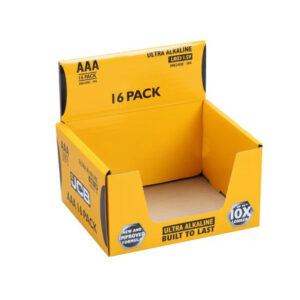
Cardboard shelf ready packaging keeps products aligned, visible, and easy to replenish from pallet to aisle without extra unpacking or messy waste. Retail teams looking for Cardboard shelf ready packaging for sale often compare tray heights, perforation lines, and print zones with their existing Cardboard Counter Display Units so everything works together at the shelf edge. This style of Display-ready packaging lets cases arrive on pallets, move through back rooms, and reach gondola shelves with minimal extra handling. Packs stay upright, barcodes stay readable, and staff can open, remove, and place units quickly during busy trading hours while still keeping aisles tidy.
In many stores, the first impression a shopper has of a product line comes from the way Shelf packaging presents it on the fixture. Shelf ready display boxes built from strong board and clear print help each SKU hold its place, even after repeated touch and re-stocking. Corrugated packaging solutions in this format also support price ticketing, category messaging, and promotional flashes without blocking brand artwork. Because the packaging doubles as both transit case and display frame, teams can cut down on loose cardboard waste in aisles and shorten the time needed for each replenishment round.
How shelf ready display boxes improve retail flow and clarity
Shelf ready display boxes bring together transport strength and smart front-of-shelf presentation in a single structure. Staff open pre-cut sections, fold or remove panels along perforations, and move the ready unit straight onto the shelf or counter. That means fewer loose shippers stacked in the back and more product available for shoppers during peak times. When lines sit in consistent Cardboard shelf ready packaging, it is easier to keep planograms accurate and restock the right items in each location.
From the shopper’s side, organised Cardboard shelf ready packaging supports quick decisions. Packs face forward, branding sits at a steady height, and labels for flavours, sizes, or variants remain visible even when stock is partly sold. Shelf Ready packaging examples in well-run stores show how strong edges and clear colour blocking guide customers down the aisle. In sectors where Mondi Corrugated style systems are well known, a similar disciplined approach to corrugated display can help even smaller brands look organised and reliable on the shelf.
Benefits of cardboard shelf ready display packaging
- Reduces unpacking steps by combining transit case and display unit in one piece
- Helps staff keep planograms neat, with clear positions for every SKU on the shelf
- Supports quick stock rotation by keeping barcodes and date marks easy to see
- Cuts loose cardboard waste on the shop floor, improving safety and appearance
- Gives shoppers a consistent, easy-to-scan view of ranges and promotional lines
Steps to design and roll out shelf ready retail packaging
- Identify which products will travel in Cardboard shelf ready packaging and where they will sit in store.
- Measure shelf depths, heights, and backing positions so case footprints and front profiles match real fixtures.
- Decide where tear lines, perforations, and opening points should sit to help staff work quickly without damaging packs.
- Test a small batch in selected stores to check opening time, on-shelf performance, and shopper responses.
- Refine board grade, print layout, and opening patterns before scaling to full distribution across the network.
| Feature focus | Description of how it supports retail use | Material options for different ranges | Surface finish and print treatments | Extra elements to help store teams and shoppers | Typical usage across categories and channels |
|---|---|---|---|---|---|
| Transit to shelf flow | Case travels from pallet to aisle with minimal steps | Corrugated board in grades tuned to weight and stack height | Matte or gloss outer, brand colours, sharp text | Tear-away fronts, fold-down windows, tidy side panels | Grocery aisles, health and beauty, household cleaning lines |
| On-shelf product visibility | Front edge frames packs without hiding details | Smooth outer liners for clear Shelf Ready packaging examples | Print areas aligned with artwork and barcode zones | Low-cut fronts, shaped cut-outs, clear opening cues | Display-ready packaging for promotions and everyday ranges |
| Operational efficiency for staff | Structure supports quick opening and replenishment | Board strengths chosen for backroom stacking and handling | Easy-to-read handling icons and opening markers | Pre-marked tear strips and reinforced fold points | Busy supermarkets, convenience stores, discount and value retail |
Cardboard shelf ready packaging wholesale planning and execution
Cardboard shelf ready packaging wholesale programs help retailers and brand owners put structure around the way products travel from production to fixture. Teams that already group transit cartons into Cardboard Boxes For Specific Uses can match those ranges with dedicated shelf ready display boxes for each aisle or promotional zone. With a clear wholesale plan, businesses can standardise footprints, heights, and tear line patterns so store staff always know what to expect when a case arrives. This keeps back rooms less cluttered and speeds up changeovers between campaigns.
From a commercial view, Cardboard shelf ready packaging wholesale arrangements allow consistent negotiation of board grades, print runs, and delivery schedules. Buyers can plan how many transit-only cases they need versus how many fully Display-ready packaging units will move through each channel. Corrugated packaging solutions in this area often sit at the meeting point between branding, category management, and logistics, so shared decisions between teams are essential. When the same designs form part of Shelf Ready packaging examples used in training, staff at multiple sites can understand best practice quickly.
Shelf ready packaging examples that guide long term product ranges
Strong Shelf Ready packaging examples in existing aisles act as teaching tools for future projects. Teams can see how well the front edges hold shape, whether packs stay upright at low stock levels, and how easy it is to reach items at the back. Over time, these observations build a bank of knowledge that guides new Cardboard shelf ready packaging for sale across categories. Retailers learn which profiles work best for tall bottles, which for small cartons, and which for bags or flexible packs.
When planning medium and long-term ranges, decision-makers also look at how Shelf packaging interacts with ticket rails, lighting, and adjacent categories. A layout that works for a single promotion might not work as a permanent solution across multiple seasons. Wholesale structures need to handle both everyday rotation and peaks around events or launches. Detailed planning gives brand owners confidence that their Shelf ready display boxes will still look tidy and reliable months after the first roll-out, supporting repeat purchase and clear on-shelf storytelling.
Planning priorities when building wholesale shelf ready ranges
- Match box footprints and front profiles to real shelf measurements and ticket rail positions
- Allocate clear roles to each design, such as pallet only, backroom storage, or full shelf ready display
- Check that tear lines and perforations work consistently across all print runs and board batches
- Align artwork with brand guidelines while leaving room for promotions and price flashes
- Review real store performance during peak trading days as well as quieter periods
Sequential steps to organise shelf ready wholesale programs
- Map categories and fixtures where Cardboard shelf ready packaging wholesale will be introduced first.
- Group SKUs by pack type and height, then decide which front profiles and tray depths match each group.
- Work with print and packaging partners to test sample cases in live or pilot stores with full merchandising.
- Capture feedback from store staff on opening speed, waste handling, and shopper reactions to Shelf packaging.
- Finalise board grades, print layouts, and size lists, then build them into supply chain and range planning calendars.
| Feature focus | Description aligned with wholesale planning | Material options for differing route demands | Surface finish and artwork emphasis | Extra elements for category and store teams | Typical usage in multi-site rollouts |
|---|---|---|---|---|---|
| Range structure and hierarchy | Organises SKUs into consistent shelf ready families | Corrugated choices tuned to ambient, chilled, or heavy goods | Clean branding with space for offer messages | Colour coding, icon systems for pack types | National chains and regional groups with varied store formats |
| Cost and print efficiency | Balances visual impact with long-run cost control | Mixed board weights for different tiers of product | Shared design templates across multiple SKUs | Standardised die-lines and artwork zones | Private label, brand families, and seasonal sub-ranges |
| Store execution and training support | Provides clear examples for staff training | Durable board to withstand repeated handling in back rooms | Distinct opening marks and clear merchandising fronts | Photo guides, sample packs, and demonstration units | New store openings, refits, and large promotional programmes |
Retail shelf packaging layouts for shopper centred displays
Retailers that refine their Shelf packaging layouts often see direct gains in on-shelf availability, replenishment speed, and overall shopper satisfaction. Cardboard Shelf Ready Packaging becomes a working tool for store teams rather than just a wrapping around the product. Many brands coordinate case designs, tray heights, and colour zones through Cardboard Packaging Boxes so that back-of-house logistics and front-of-house presentation are treated as one connected system. By doing this, they avoid conflicts where cases are strong enough for transit but awkward or messy when opened in the aisle.
A well-planned set of Display-ready packaging designs can support everything from everyday lines to high-profile feature bays. Shelf ready display boxes built on compatible dimensions can move between standard fixtures, promotional ends, and counter units without complicated adjustments. For categories like snacks, personal care, and small household goods, this flexibility helps retailers respond to trends and trial new Shelf Ready packaging examples quickly. When the underlying Corrugated packaging solutions stay consistent, teams can rearrange planograms without needing entirely new packaging each time.
Display-ready packaging for promotional and seasonal campaigns
Promotional and seasonal activity demands quick changes, strong visibility, and reliable handling. Display-ready packaging structures give teams a way to refresh aisles and secondary sites without loading staff with extra cutting and arranging tasks. Carefully chosen profiles frame packs attractively while leaving enough space for price flashes, tags, and seasonal artwork. For complex category plans, this approach can sit alongside free-standing units and counter solutions, all guided by the same set of shelf packaging rules.
Retailers also answer many “how” and “what” questions through these designs. Shoppers want to know what is new, which flavour sits where, and how multi-buy or bundle offers work. Clear front edges, upright packs, and consistent case heights make this information much easier to express. Compared with plain shipper boxes, modern Shelf Ready packaging examples present a more organised view, giving shoppers confidence that stock is fresh and correctly arranged. Over time, that clarity supports smoother browsing and quicker decision-making.
Key advantages of shelf packaging in busy retail locations
- Helps highlight promotions and seasonal lines without overwhelming the main assortment
- Allows fast removal of empty cases while leaving shelves neat and ready for next fills
- Supports strong brand blocks as well as cross-category displays in shared fixtures
- Keeps product faces clear even when stock levels drop during peak hours
- Reduces staff workload on manual re-facing of packs between rush periods
Practical steps to use shelf ready packaging across campaigns
- Choose which lines will lead seasonal or promotional activity and group them by pack size and shape.
- Select compatible Cardboard shelf ready packaging designs that can move between aisles, ends, and counters.
- Coordinate artwork and colour bands so shoppers can quickly read themes and offers from a distance.
- Test layouts in a few stores to check stock flow, replenishment time, and how well cases support POS material.
- Adjust case fronts, heights, and print where necessary, then roll the refined designs into wider campaigns.
| Feature focus | Description connected to campaigns and displays | Material options tuned for promotional timelines | Surface finishes that support graphics and signage | Extra elements for seasonal and themed executions | Typical usage in promotional and themed retail activity |
|---|---|---|---|---|---|
| Campaign flexibility and reuse | Designs move between different fixtures and bay types | Corrugated board suited to short and medium-run volumes | Flat, smooth surfaces for high-impact graphics | Interchangeable inserts and removable headers | Feature ends, mid-aisle events, cross-category locations |
| Shopper guidance and information flow | Layouts support clear messaging on offers and ranges | Board grades that keep edges sharp under frequent restock | High contrast print for price and feature messages | Front zones for tags, wobblers, or clip-on elements | Seasonal aisles, launch displays, shopper education zones |
| Operational balance for store teams | Packaging supports quick resets and new themes | Durable enough for several re-merchandising cycles | Consistent colour coding across campaign elements | Easy-tear panels and simple disposal or recycling options | Weekend promotions, holiday events, and rapid range refreshes |