






Description
Triple wall corrugated boxes for heavy loads
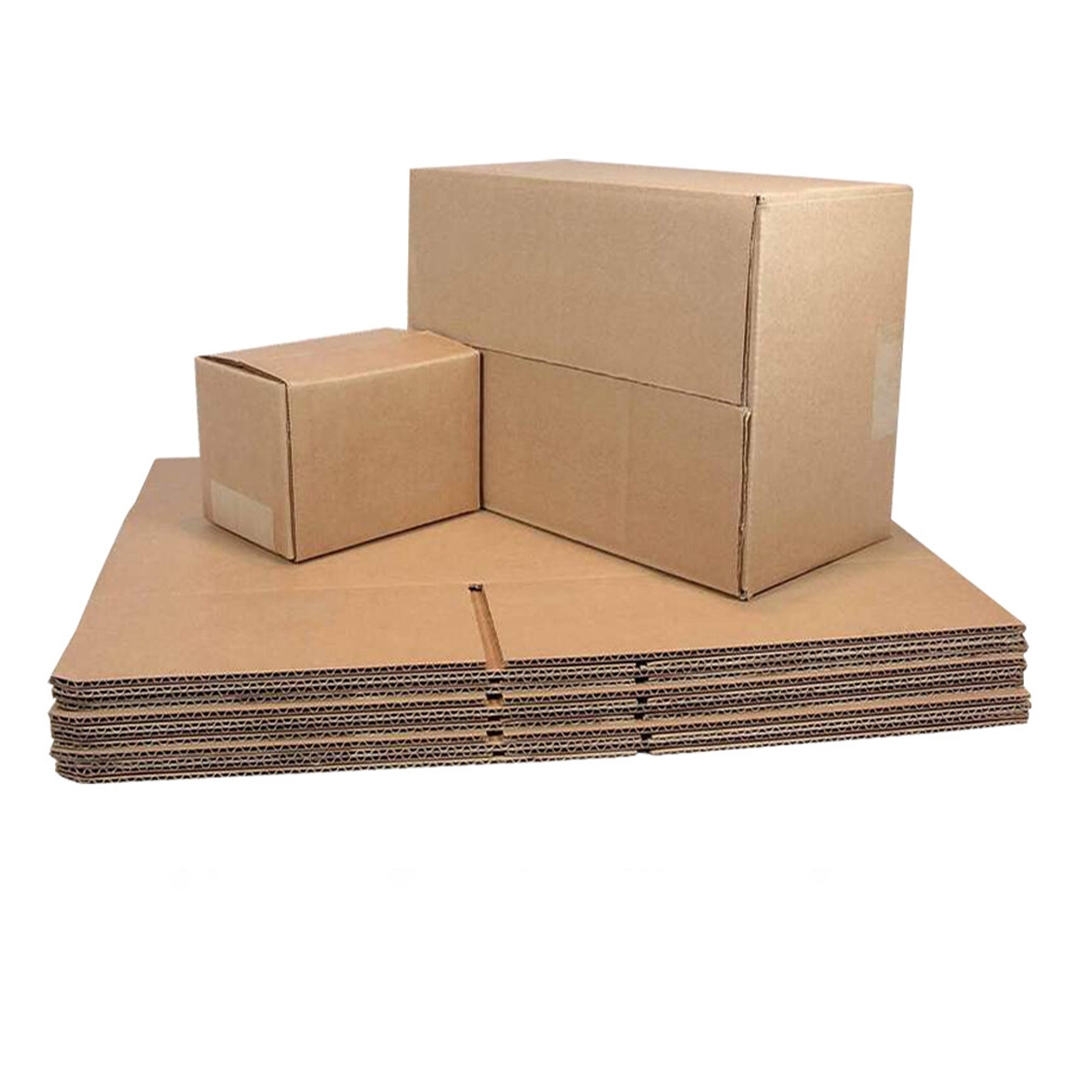
Triple wall corrugated boxes give heavy products a secure, engineered home for shipping, storage, and long-distance movement. They offer a serious step up from standard cartons such as Single Wall Cardboard Boxes when you need strong performance without the weight of wood. The multi-layered wall carries metal parts, machinery, automotive components, and dense bulk items with a calmer, more controlled ride. Even under pressure, the structure keeps sides upright so boxes remain dependable on pallets and warehouse racks. Brands that handle demanding cargo often use this style as their main upgrade path from double wall.
The build replaces many traditional wooden crates by delivering similar strength in a lighter, more manageable format. Teams can handle units more easily by hand, while forklifts and pallet trucks still have all the support they need for stacked loads. The reduced weight helps with freight planning and can ease strain on staff during loading. Thick fluted walls absorb shocks from bumps, braking, and long-haul vibration across trailers and containers. Over time, this structure becomes a quiet but important part of a safer packaging system for heavy stock.
How triple wall construction supports product safety
Triple wall liners use three separate fluted mediums, often in mixed profiles, to build a deep, resilient wall between the product and the outside world. Each layer helps spread impact forces across a wider area so no single point takes the full hit during handling or transport. This three-part cushion behaves like a built-in buffer that slows down sudden movement and supports the inner contents. The result is fewer crushed corners, fewer split seams, and less risk of packages failing mid-route.
Compression strength is another key advantage of this build. When pallets are stacked high, the fluted network carries vertical loads down to the floor without panels buckling. This protects products on lower layers from being squeezed by the mass above them. The same benefit applies to long-term storage in warehouses where stacks may remain in place for weeks or months. Strong edge performance and higher test ratings mean the structure keeps working even under sustained pressure.
Key performance benefits in daily operations
- Helps carry heavy mechanical and industrial products with less risk
- Resists crushing forces when pallets are stacked in tight warehouse layouts
- Reduces damage from shocks, bumps, and long-haul vibration on the road
- Feels lighter than typical wooden crates, which eases manual handling
- Adapts to a wide range of footprints from small parts to large components
- Provides thick walls that support secure banding, strapping, or wrapping
- Works well with pallet footprints to keep loads stable in transit
- Shows wear more slowly than lighter grades under repeated use
Planning checks before first triple wall order
- List products that regularly suffer damage in current cartons.
- Record weights, dimensions, and stacking needs for each item group.
- Confirm if loads will move mainly by road, sea, air, or mixed routes.
- Decide how long stacks will sit in storage between shipments.
- Note any special handling points such as sharp edges or oily surfaces.
- Review whether units need hand holes, pallet feet, or internal fittings.
- Check if printed handling symbols and codes must be visible on all sides.
- Share these details so board grade and flute mix can be matched properly.
| Feature focus | Structure detail | Material notes | Added options | Main use |
|---|---|---|---|---|
| Flute layout | Three coordinated fluted layers for depth | High-grade kraft linerboard | Moisture-resisting coatings | Industrial packing runs |
| Compression strength | Built to manage stacking and high loads | Recycled and virgin fibre blends | Anti-abrasive outer finishes | Warehouse storage stacks |
| Weight profile | Lighter than comparable wooden crates | Triple wall corrugated board | Gloss or matte laminate where needed | National and export freight |
| Impact behaviour | Cushions shocks from handling and transit | Multi-ply construction | Wax treatment for specific routes | Bulk product packaging lines |
Industrial applications and material strength control
Triple wall boxes serve factories, engineering firms, and exporters that handle dense, awkward, or fragile items. Many buyers compare grades within Cardboard Boxes by Material Strength to match board profiles to specific product risks and routes. Triple wall options sit at the top of that range, supporting heavy-duty loads that would strain lighter constructions. From metal parts and machine assemblies to automotive components and dense sub-assemblies, this structure gives demanding shipments a safer outer shell.
The same build supports long-term storage where pallets stand under static load for extended periods. In these situations, side walls must stay upright without bowing, even when humidity and temperature fluctuate. Triple wall construction offers that extra layer of reassurance by pairing high compression values with thick fluted cores. In export channels, the material helps products withstand rougher handling and longer travel times without needing the full mass of timber crates. This balance between protection and weight is central to modern industrial packaging.
Why industrial shippers rely on triple wall boards
Industrial logistics brings together heavy cargo, mixed handling, and sometimes inconsistent routes. Triple wall boards are chosen because they handle those combined stresses better than standard grades. The higher edge crush test ratings show that walls can manage vertical pressure from stacking, while improved bursting strength helps panels resist sudden impact or piercing forces. Together, these qualities support complex loads that move by forklift, pallet truck, or crane.
Sea freight and long land journeys are another reason triple wall grades are widely used. Containers can experience vibration, climate changes, and shifts in loading pattern over time. The deep wall structure provides a buffer against these variables, reducing the chance of packaging failure mid-journey. Protective coatings may be added where moisture is a concern, giving the board more resilience in damp or changing environments. For shippers, this greater reliability translates into fewer surprises and less product loss.
Advantages for factories and long routes
- Handles dense, unevenly shaped industrial components more confidently
- Manages tall pallet stacks with reduced risk of lower layers collapsing
- Supports sea freight and long-haul transport with stable panel strength
- Accepts custom internal fittings for tools, assemblies, or part sets
- Works with banding, film, or straps without crushing the outer edges
- Can be lined or coated when humidity or moisture is part of the route
- Helps standardise packaging across multiple industrial product lines
- Reduces reliance on heavier timber crates for many use cases
Steps to align box style with product risk
- Group cargo types by weight range and fragility level.
- Identify which groups experience impact, piercing, or vibration issues.
- Decide where triple wall is essential and where lighter grades remain suitable.
- Check if goods require internal dividers, foam pads, or fittings.
- Match box footprints to pallet sizes used in your warehouses.
- Confirm whether humidity protection or wax-style coatings are necessary.
- Review test requirements such as ECT, bursting, or ISTA protocols.
- Document your chosen structures so reorders remain consistent.
| Performance area | Detail overview | Material grade | Resistance focus | Typical cargo |
|---|---|---|---|---|
| Maximum load support | Handles significant stacked weights on pallets | Triple wall kraft board | Vertical pressure and stacking weight | Heavy components and machinery parts |
| Industrial usage | Suited to metal items, tools, and auto parts | High-strength fibre mixes | Internal pressure and rough handling | Factory and engineering shipments |
| Route durability | Built for extended journeys and port handling | Heavy-duty liners | Transit stress, vibration, and moisture with coatings | Sea freight and mixed modal routes |
| Stack stability | Maintains shape under constant static load | Thick fluted mediums | Crushing forces and prolonged stacking | Warehouse and long-term storage |
Custom sizing and printed identification options
Triple wall corrugated boxes can be sized to match product footprints closely, reducing empty air while still leaving safe clearances. Many teams standardise a core group of Heavy Duty Triple Wall Corrugated Boxes that match their key pallet and racking layouts. Within those groups, slight changes in height or internal fittings can adapt to different items without rewriting the whole packaging plan. This keeps ordering and inventory simpler while still giving each product the support it needs.
Printed identification turns every heavy-duty carton into a clear information panel for staff and logistics partners. Box panels can carry product codes, batch numbers, handling symbols, orientation arrows, and simple brand marks. High-resolution CMYK and PMS options allow both detailed labels and larger graphics to remain legible even on rougher surfaces. Over time, consistent printing helps teams pick, store, and load faster because each unit can be understood at a glance.
Style choices for pallet, bin, and crate replacements
Triple wall material can be converted into a range of layouts to replace crates, bins, and large shipping shells. Full overlap styles increase seam coverage to support edges and corners for particularly heavy or sharp items. Pallet-size containers give bulk products a defined outer frame while letting the pallet carry the main weight. Deep bins can act as semi-permanent storage vessels on factory floors, holding parts or offcuts within a strong but lighter shell than metal or timber equivalents.
Half-slotted containers and related designs help when goods need easier access on one side while still staying protected overall. Hand holes can be cut into walls to support manual handling where weights allow. Coatings such as gloss, matte, or selected surface treatments can be combined with protective laminations for improved resistance to dust and light moisture. All of these choices let businesses tune the structure to the realities of their own workflow.
Custom features that support handling and control
- Full panel branding for clear ownership and shipment recognition
- Printed handling symbols to guide lifting, stacking, and orientation
- Barcodes and sequential numbering to support tracking systems
- Reinforced corners or patches for areas that face regular impact
- Die-cut hand holes where safe manual lifting is required
- Pallet-size footprints for smoother loading with minimal overhang
- Optional coatings to support damp or dusty environments
- Internal fittings customised to part sets or assembly kits
Practical steps to brief a custom box project
- Measure typical product groups with and without existing packaging.
- Decide how closely box footprints should follow pallet dimensions.
- List information that must appear on the outside panels.
- Identify where hand access is needed for lifting or picking.
- Flag any areas requiring extra reinforcement or protection.
- Choose print coverage levels, from simple codes to full branding.
- Confirm likely order volumes and how often sizes may change.
- Share photos or sketches of current loads to guide style selection.
| Focus area | Detail summary | Material options | Printing choices | Typical style |
|---|---|---|---|---|
| Decoration and marking | Space for branding and clear instructions | White and kraft boards | CMYK and PMS colour systems | Full overlap box formats |
| Surface finishes | Protection of board and graphics | Coated outer papers | Digital or offset printing | Pallet-size container shells |
| Overall dimensions | Sizes linked to product and pallet fit | Triple wall fibreboard grades | High-resolution graphic zones | Heavy-duty storage bins |
| Access and handling | Openings and guidance for use | Corrugated substrates | Direct panel printing | Half-slotted containers with hand holes |
Bulk supply, storage and ongoing logistics support
Triple wall corrugated packaging supports businesses that move heavy goods regularly and want fewer surprises in the form of damage or returns. Many firms arrange their high-strength supply through Shop Cardboard Boxes so heavy-duty units sit alongside lighter cartons in the same overall program. This makes it easier to select the right structure for each product while keeping ordering and storage processes unified. Triple wall lines often become the foundation for the heaviest SKUs and export routes.
Wholesale supply allows companies to run consistent structures across many production batches rather than piecing together small, mismatched orders. Bulk quantities can be staged across pallets, delivered in sequences that match production schedules, or held ready for seasonal peaks. Because the board grade and styles remain stable, testing and internal approvals do not need to be restarted for every order. This steadiness supports a smoother, more predictable packaging and logistics chain.
How bulk programs reduce damage and hidden costs
Switching heavy or sensitive items into triple wall formats can significantly cut the number of cartons that fail under pressure. Each avoided failure reduces the risk of product loss, rework, and urgent replacements, which are all hidden costs in many operations. Over time, fewer breakages and less re-packing can more than offset the higher up-front grade compared to standard boxes. The consistent performance also helps teams plan stacking and loading with clearer limits.
Bulk programs make it easier to align with warehouse processes. Because the same footprints and strengths recur across product lines, staff learn how each format behaves and can build loads more confidently. Recorded experience with certain stack heights or load patterns carries over to new orders. This accumulated understanding helps companies run safer warehouses, calmer loading docks, and more predictable outgoing shipments.
Benefits of switching to triple wall programs
- Reduces damage during transit for heavy and sensitive shipments
- Cuts rework and repacking time caused by failed cartons
- Supports clearer stacking rules and load planning across sites
- Helps maintain stable stock of high-strength packaging grades
- Integrates with existing pallet and racking systems smoothly
- Simplifies export planning by relying on proven structures
- Builds internal confidence in how loads will behave in transit
- Supports long-term storage where stacks remain in place for weeks
Steps to start and grow a triple wall supply plan
- Identify SKUs that cause the most damage or return issues today.
- Map where these items travel and how often pallets are restacked.
- Agree which lines should move first into triple wall packaging.
- Choose a small family of sizes that cover those initial products.
- Review how new boxes fit existing pallets, racking, and vehicles.
- Track damage and handling feedback after the first implementation.
- Expand the triple wall range where results are positive and repeatable.
- Document standards so purchasing and operations follow the same plan.
| Planning area | What you define | Impact on performance | Impact on cost control | Example decision |
|---|---|---|---|---|
| SKU selection | Which products move into triple wall | Lower damage rate and stronger stacks | Focus spend where risk is highest | Shift heavy machinery parts first |
| Size family | Core footprints and heights in the range | Predictable pallet layouts and storage | Fewer unique sizes to manage | Three base sizes for all heavy lines |
| Print and marking | Level of external information | Faster picking and handling accuracy | Controlled artwork and plate use | Shared layout across product groups |
| Delivery pattern | How and when boxes arrive on site | Smoother integration with production | Less last-minute emergency ordering | Monthly scheduled pallet shipments |