
Cardboard Salad Boxes

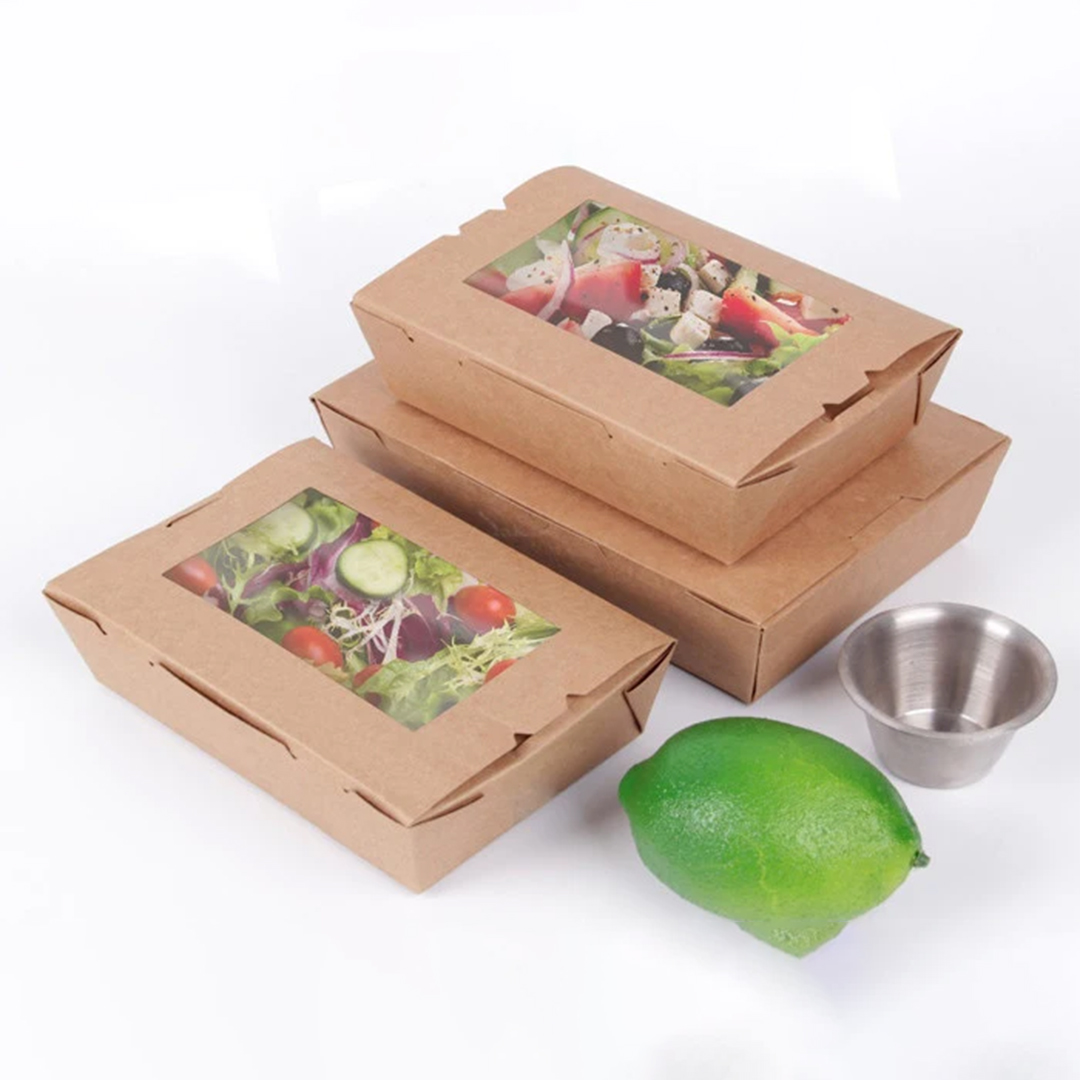
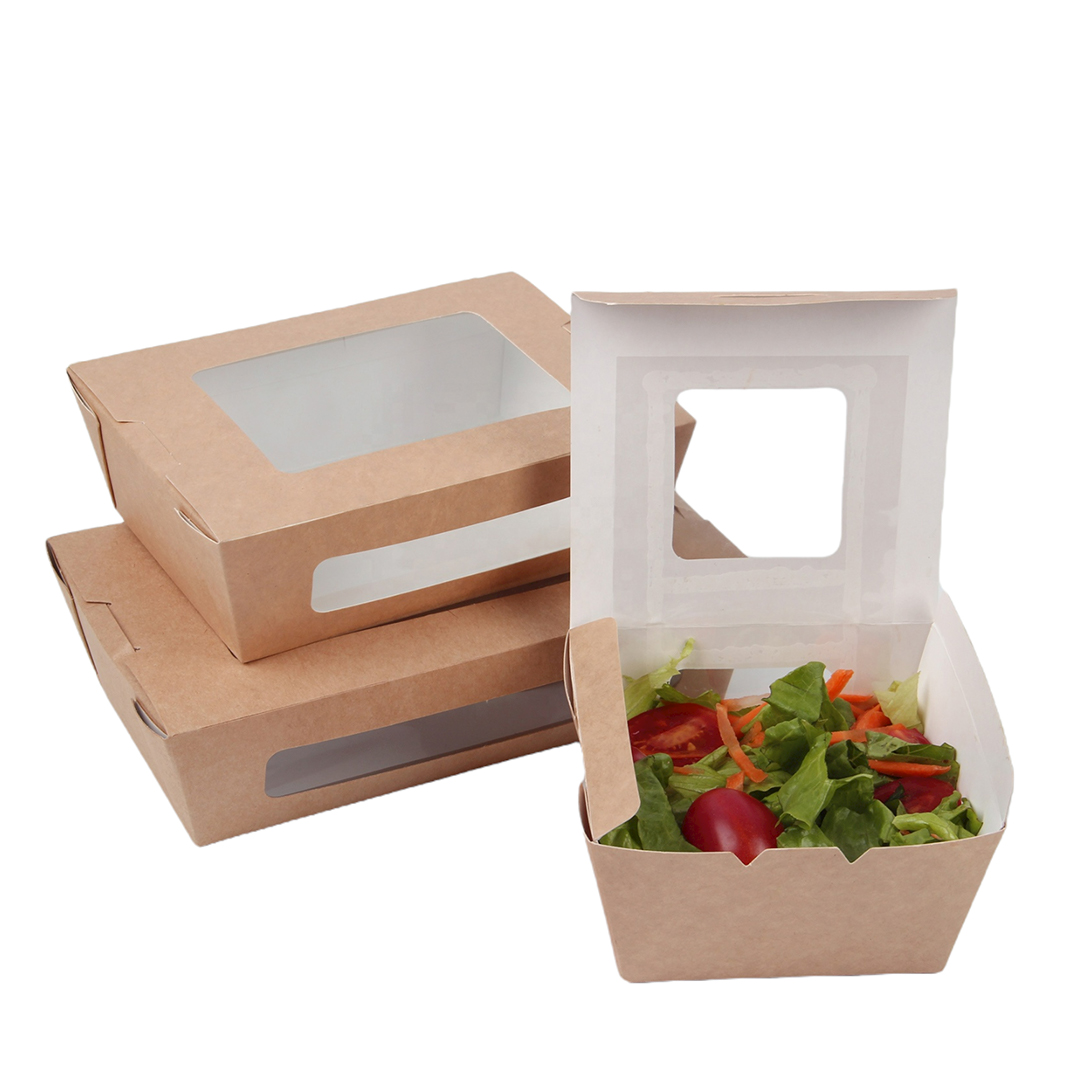
Cardboard salad boxes help food businesses keep salads fresh, structured, and ready for transport during lunch hours, deliveries, and meal prep services. In the second line, many sellers rely on Shop Cardboard Boxes to get strong salad boxes with lids, clear windows, and food-safe board suitable for healthy meals.

Description

Cardboard salad boxes for fresh meal brands

Cardboard salad boxes help restaurants, cafes, meal prep services, and takeaway brands keep salads looking neat while they move from kitchen to customer. Many chilled counters also line up salads next to Cardboard Sushi Boxes, especially when the menu mixes light bowls, nigiri trays, and healthy office lunches in one shared display. These boxes support cold servings and mixed greens with firm walls that resist collapsing, so dressings and toppings stay where the chef intended. Teams can stack them in fridges or delivery bags without worrying that the salads will lose their shape halfway through the journey.

The same structure works for pasta salads, fruit bowls, protein bowls, cold grain mixes, and everyday lunch sets that need a little depth for dressings. Strong bases help hold layered recipes together, while lids keep outside air away so leaves stay crisp for longer. Kitchens can order Cardboard salad boxes wholesale in sizes that match their menu, then rely on the same footprints for both regular and seasonal dishes. Over time, this makes it easier to plan prep schedules, manage stock, and keep presentation standards steady across busy service hours.

Everyday performance of salad packaging solutions

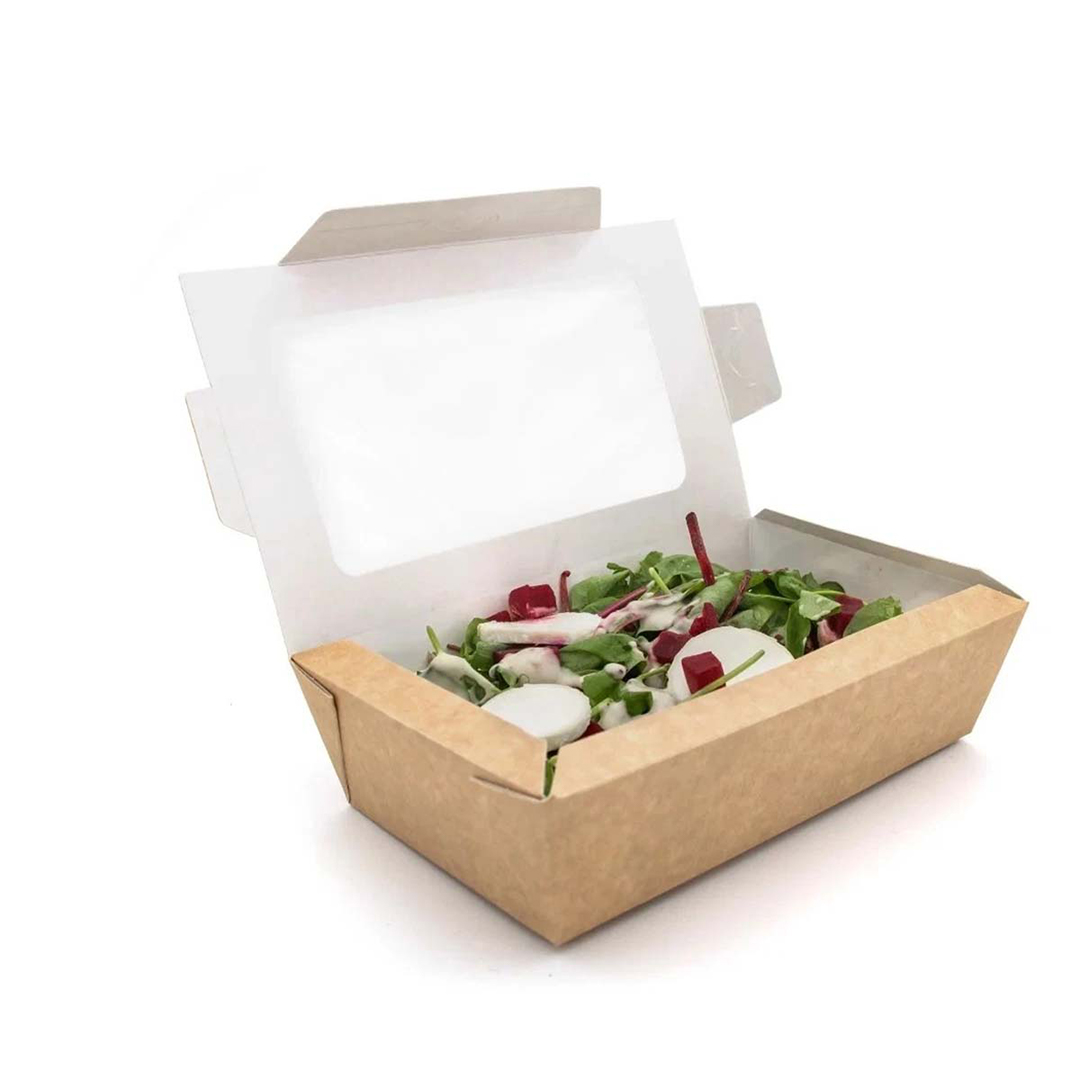
Fresh salad service depends on packaging that respects the texture of delicate ingredients instead of crushing them. Cardboard salad boxes create a simple frame where leafy bases, chopped vegetables, proteins, and grains sit securely without sliding to one side. The flat base gives the meal a stable platform, so when customers lift the lid, they see a composed bowl rather than a pile that has shifted in transit. This helps the food look closer to how it left the kitchen, which builds quiet confidence in the brand.

The same layout supports single orders and grouped meals without demanding new routines from the team. Staff can fold empty boxes in moments, line them up, portion salads in a steady rhythm, and move finished units straight to chilled shelves or courier stations. Because empty units store flat, back-of-house space stays available for other supplies even when order volumes rise. As menus evolve through seasons or promotions, the familiar box structure lets teams introduce new recipes without redesigning the entire packing process.

Key advantages of fresh salad box packaging

  • Helps salads keep their colour and structure during delivery
  • Reduces compression on leaves, fruit pieces, and delicate toppings
  • Supports clear portion sizes for individual and shared meals
  • Limits leaks from dressings and moist ingredients when handled
  • Fits neatly into fridges, display cabinets, and delivery bags
  • Leaves clean areas for labels, dates, and branding details
  • Adapts to a wide range of salad styles and menu concepts
  • Works reliably for regular weekly orders and pop-up events

Practical improvements for daily food handling

  1. Keeps packing steps simple during busy lunchtime and evening rushes
  2. Makes stacking easier so prepared orders travel without crushing each other
  3. Allows teams to pre-pack chilled meals ahead of peak periods
  4. Helps multiple branches maintain similar presentation standards
  5. Cuts down on spills, which reduces cleaning time at workstations
  6. Supports consistent portion control for diet or subscription plans
  7. Fits into contact-free handovers and locker-style collection points
  8. Gives delivery partners a stable format that behaves predictably in transit
Feature Detail Material Finish Purpose
Salad depth Room for layered toppings and dressings Food-safe cardboard Soft matte feel Individual and family meal prep
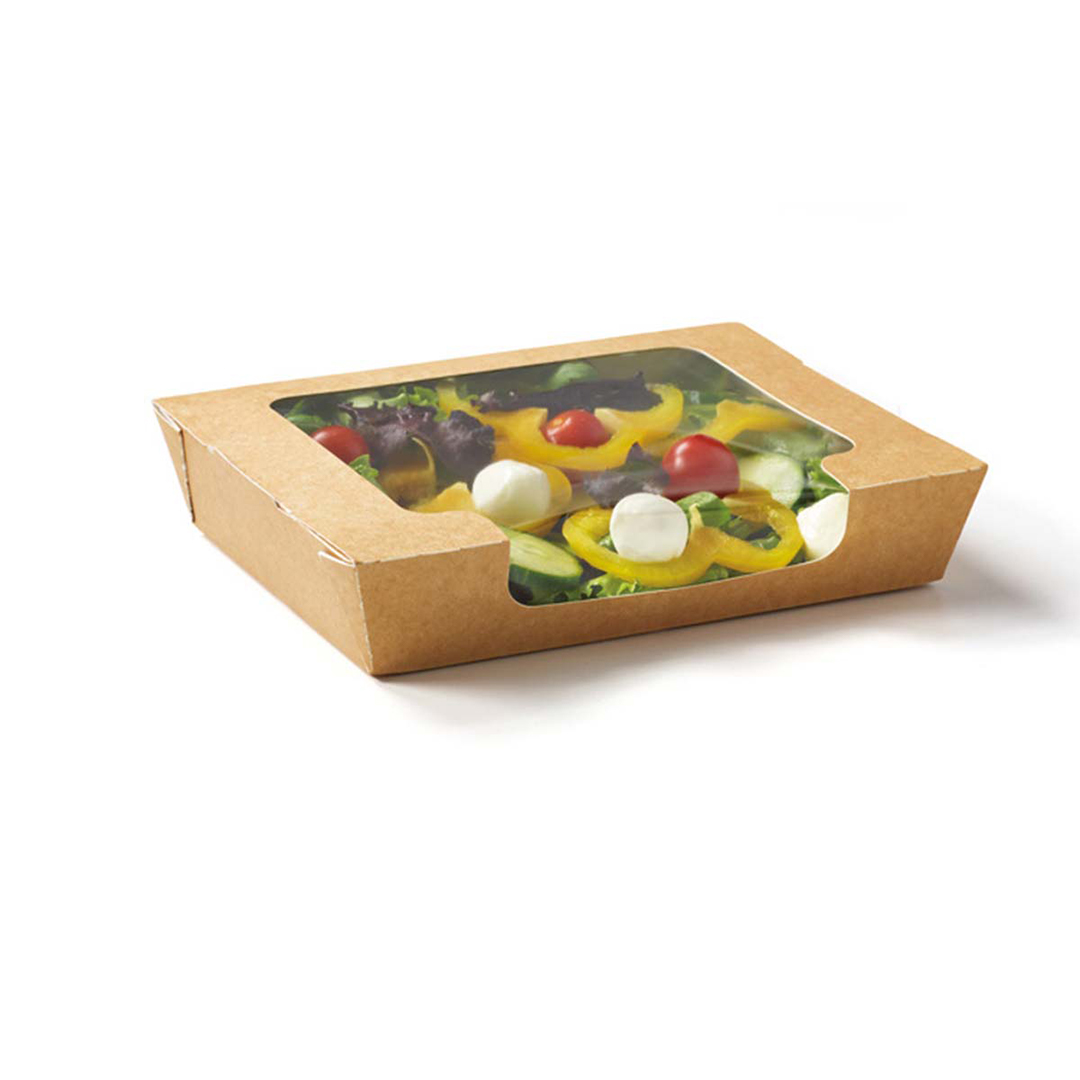
Clear window Lets customers see ingredients inside Kraft or SBS with film Light gloss sheen Retail and chilled display units
Strong walls Helps sides stay straight on the move Rigid board styles Smooth outer surface Takeaway and courier delivery
Wide base Gives space for mixed components Certified food card Gentle matte look Cold bowls, grains, and mixed salads

Large cardboard salad boxes for events and prep programs

Large cardboard salad boxes support office lunches, corporate gatherings, weekly meal prep plans, and gym-focused menus where portions are bigger and ingredients vary more. When planning these lines, many catering teams use Food Related Cardboard Boxes as a starting point so salads, wraps, sushi bowls, and other cold dishes share a consistent packaging look. The extra width and depth help organise proteins, grains, and leafy components in sections that still feel tidy once the lid is opened at the table. This makes it easier to serve guests quickly while keeping plates looking intentional.

Deeper bases suit protein-heavy meals such as grilled chicken salads, quinoa bowls, pasta salads, and cold rice dishes that need a little more support. The broad footprint stops ingredients from crowding together, while the lid protects delicate toppings until the moment of serving. Drivers and staff can carry stacks across venues or office corridors with reduced risk of boxes bending or sagging under weight. For event organisers and meal prep services, this steadiness becomes one of the quiet reasons orders arrive looking prepared rather than shaken.

Event-ready salad packaging for volume catering

Caterers work under time pressure, often in unfamiliar spaces, so packaging has to be predictable and straightforward. Large salad boxes give enough area to lay out proteins, sides, and leafy components without creating awkward gaps. The firm board tolerates being lifted, shifted, and re-stacked as rooms are set up and cleared, which matters when kitchen and serving zones are separate. Guests see a composed meal instead of ingredients sliding to one side, which helps them feel the food has been handled with care.

For long-running meal prep programs, larger units support a weekly rhythm where cooking and packing fall into repeatable patterns. Teams can standardise a few key sizes, portion according to plan, and build full sets for each client or group before storing them in chilled racks. Cardboard salad boxes wholesale supply gives enough volume for recurring orders without constant re-specifying, which keeps admin lighter. Clear panels and labels help recipients identify their meals quickly from office fridges or home deliveries.

Benefits of using large salad carriers

  • Offers generous space for multi-component or high-protein meals
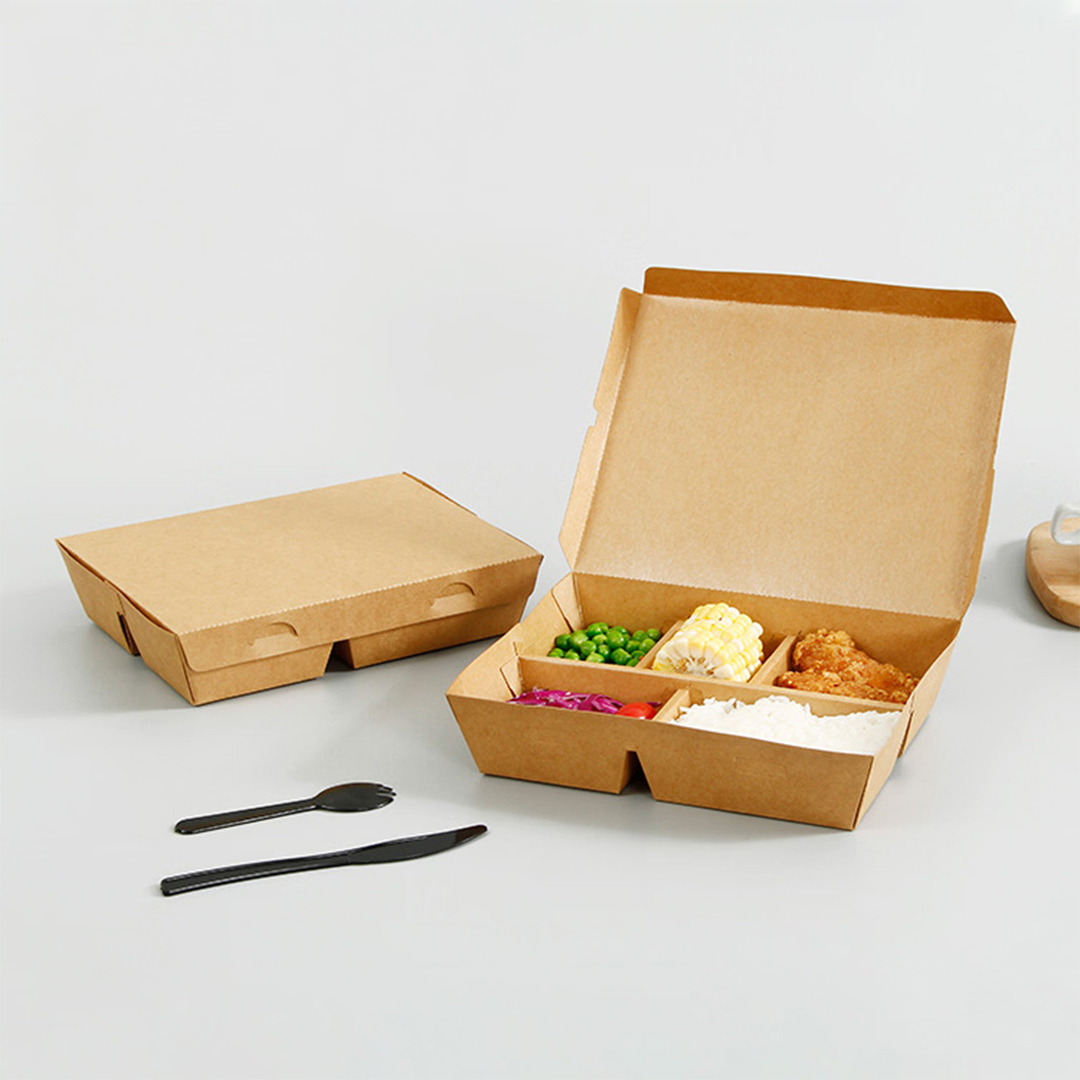
  • Supports tidy separation between bases, toppings, and add-ons
  • Protects dressing pots, sachets, or small containers along the sides
  • Helps chefs present layered recipes without early mixing or crushing
  • Works well for weekly menus that repeat across several client groups
  • Stacks in vehicles and storage areas without leaning into other boxes
  • Accepts dividers when kits need several compartments in one pack
  • Adapts to corporate, social, and health-focused events with the same core sizes

Helpful ideas for large meal service layouts

  1. Match wider bases to mixed grain and salad combinations that need room
  2. Reserve deeper versions for recipes with extra liquid or delicate toppings
  3. Use clear-topped variants when food will sit on display tables or buffets
  4. Keep flat lids available for heavy labelling, timing, or allergen notes
  5. Arrange boxes in simple repeated patterns to speed up serving lines
  6. Group sizes by capacity so ordering and storage stay easy to understand
  7. Run practice deliveries with sample loads to check box behaviour in real routes
  8. Record which size combinations perform best and repeat them in future schedules
Type Size range Material Insert style Main use case
Wide salad box Medium to large footprints Kraft food board Plain open interior Meal prep runs and healthy deliveries
Deep salad unit Extra depth for layered bowls Rigid card Reinforced base support Events and longer-distance transport
Window salad carrier Multi-portion layouts SBS with clear top window Shallow internal platform Retail shelves and buffet-style service
Bulk salad tray Large shared serving area Corrugated board No internal insert Catering tables and group self-service

Printed salad packaging and branding options

Healthy meal brands need packaging that keeps ingredients protected while still sharing a clear visual message with customers. Many businesses work with Cardboard Boxes for Packaging when they want salad boxes that combine practical depth, viewing windows, and food-safe coatings in one system. Printed salad packaging lets a logo, short description, and simple icons sit on the same box that carries the meal. This helps people recognise their regular provider whether they are collecting lunch from a fridge, receiving a delivery, or unpacking at an event.

The same range can support fruit bowls, protein salads, vegetable mixes, cold pasta dishes, and kit-style combinations inside a consistent graphic layout. Multilayer capacity allows greens, grains, and toppings to sit in their own areas so textures do not blend too quickly before serving. Printed zones make space for ingredient notes, dietary symbols, and contact details without overwhelming the food itself. Because cardboard salad boxes empty store flat, brands that rely heavily on print can hold stock for campaigns or recurring orders without filling every spare corner with bulky packaging.

How printed salad boxes support brand communication

Printed surfaces turn each packed salad into a small moving sign for the brand. A familiar logo on the lid, supported by consistent colours and fonts, helps customers recognise your meals at a glance in shared fridges or office kitchens. Window sections can show the actual food, while the frame around them carries the visual identity and any key messaging. This mix of transparency and design builds trust because people can check the contents while still feeling the pack belongs to a named, reliable source.

The box shape and print layout also make it easier to run multiple menu lines without confusing staff or customers. A brand might offer high-protein bowls, plant-based options, and limited seasonal specials in the same outer format, using subtle colour cues or wording shifts to mark the differences. Teams gain a simple system for picking the right box, and customers learn to spot their preferred choices quickly. Over months and years, this steady presence helps printed salad boxes become part of how people recognise and remember the brand.

Branding strengths of printed salad packaging

  • Displays clear logos and colours across lid and side panels
  • Builds a recognisable look for very different salad and bowl recipes
  • Leaves room for ingredient notes, allergen marks, and dates on the outside
  • Aligns with corporate or event branding when required
  • Helps takeaway and delivery meals feel organised and professional
  • Supports strong presentation in chilled cabinets and grab-and-go areas
  • Provides discreet space for QR codes, offers, or contact details
  • Reinforces health-focused messaging for nutrition-conscious customers

Brand planning ideas for printed salad lines

  1. Set up a lid layout that works for all current and future SKUs
  2. Reserve the central area of the lid for the logo and main brand elements
  3. Use side bands for flavour names, dietary tags, and small icons
  4. Keep the base lightly branded to avoid visual overload
  5. Shape windows so they echo key brand motifs or simple geometric forms
  6. Colour-code by range, such as high-protein, plant-based, or children’s options
  7. Check that text and icons remain easy to read under retail lighting
  8. Refresh small graphic touches seasonally while keeping the core design steady
Branding area Print method Material Finish Typical use
Lid logo panel CMYK or selected spot colours White card or SBS stock Gloss or soft matte finish Lead branding zone for takeaway and display
Side wall band Text blocks and small icons Natural kraft substrates Matte surface Cold meal lines and chilled shelving
Window surround Light border graphics SBS with clear window Smooth outer feel Retail fridges and self-serve cabinets
Base zone Minimal marks and identifiers Strong card grades Natural or lightly coated Meal prep sets and catering-specific boxes

Bulk salad supply, storage, and kitchen workflows

Bulk salad orders for corporate events, gyms, school programs, and fitness services need packaging that keeps ingredients stable over longer periods. Many operations source units through Shop Cardboard Boxes when they want salad packaging that sits comfortably alongside other cardboard carriers in the same supply chain. Bulk salad formats help leafy components, grains, and toppings stay organised by reducing early mixing of soft ingredients with dressings. This steady behaviour simplifies the path from prep bench to distribution point.

Empty salad boxes give kitchens much needed breathing room during busy times. Flat-packed designs use minimal storage space yet can be shaped into ready-to-fill containers in a few quick steps. Once assembled, they work with lids or film coverings to protect single servings and larger sharing bowls alike. Their breathable structure supports leafy textures, sliced vegetables, and chilled proteins, which is useful when there is a gap between preparation and service. This flexibility helps teams handle sudden spikes in orders without changing the basic workflow.

Bulk packaging support for catering and regular orders

Catering and large-scale service rely on boxes that label well, travel reliably, and still look tidy when guests finally sit down to eat. Balanced bulk salad designs help maintain colour contrast between ingredients and limit pooling of moisture at the bottom. This is especially important at company lunches or school events where salads may wait on tables before everyone starts serving themselves. Neat presentation and intact textures encourage people to try the healthier choices on offer.

For daily deliveries, having a small family of medium and large sizes makes menu planning more straightforward. Each format can be linked to a certain portion range, so teams know exactly how much fits into each version. Bulk salad units share trays, trolleys, and vehicle racks with other cardboard carriers in a coordinated way, which eases the job of loading and unloading. Over time, this integrated approach shortens training for new staff and keeps service more predictable for regular customers.

Benefits of bulk and storage-focused salad packaging

  • Helps maintain ingredient colour and structure across many servings
  • Reduces excess moisture build-up at the base of chilled boxes
  • Supports secure stacking in cold rooms, vans, and serving spaces
  • Keeps toppings and delicate components better shielded during travel
  • Works well for planned large-scale service at offices and events
  • Limits the tendency for salads to settle into a compact mass over time
  • Encourages consistent presentation that supports brand perception
  • Makes the flow from kitchen to table or locker more orderly and clear

Kitchen-focused advantages of empty salad units

  1. Flat-packed stock keeps shelves and storage rooms less crowded
  2. Quick folding designs support high-volume lunch or evening services
  3. Secure closing systems help during transport and in shared fridges
  4. Windowed versions support retail-style self-selection and display
  5. Heavy-duty choices cope with dense, ingredient-rich salad mixes
  6. Standardised shapes make stock-checking and reordering more direct
  7. Flexible formats work with standalone salads and wider meal sets
  8. Clean interiors and simple folds support hygienic handling throughout prep
Box type Folding style Material Base width Common use
Flat-packed unit Quick fold layout from flat Kraft or food-grade card Medium base area Meal prep runs and chilled storage
Locking flap box Secure closure once packed Strong cardboard substrates Wider base space Takeaway salads and delivery services
Windowed pack Clear front or lid section SBS with integrated window Standard or slim footprint Retail fridges and grab-and-go stands
Heavy-duty carrier Reinforced sides and base Corrugated or rigid board Broad platform size Catering lines, buffets, and corporate meals

Feature Type Description Material Options Finishing Choices Add-ons & Features Usage / Application
Salad Capacity Sizes Multiple depth options for greens, toppings, and proteins Kraft Board, White SBS, Rigid Card Matte, Gloss, Soft Matte Clear windows, locking lids, breathable vents Takeaway salads, cold meals, retail servings
Lid-Based Salad Boxes Secure lid panel for stable transport and freshness Cardboard, Food-safe Paperboard Smooth, Semi-gloss Transparent top window, reinforced corners Delivery meals, event salads
Bulk Salad Carriers Large sizes for meal prep and catering orders Corrugated Card, Thick Kraft Matte, Natural Texture Wide base, deep walls Catering jobs, corporate meals
Branding & Printing Custom artwork, nutrition labels, and color styles Coated Card, Kraft Card CMYK, PMS Side panel printing, front branding Restaurant branding, healthy food services
Display-Oriented Boxes Window view to show salad ingredients clearly SBS Board, Kraft Soft Matte, Gloss Clear film window, cut-out designs Retail cold counters, salad bars
Empty Foldable Boxes Flat-packed storage with quick assembly Kraft, Solid Cardboard Natural finish Easy fold flaps, breathable design Meal prep kitchens, daily salad stations

1. What makes cardboard salad boxes suitable for fresh meals?

These boxes maintain the structure of leafy greens by using food-safe board that prevents compression. Their breathable design keeps vegetables crisp while allowing toppings to stay separated. Customers receive a clean, fresh-looking meal even after transport.

2. How do salad boxes help during takeaway and delivery?

Secure lids and wide bases keep ingredients from shifting during movement. Even when carriers move quickly, the salad layers remain in place without mixing. This makes the packaging reliable for restaurants and meal prep kitchens.

3. Are cardboard salad boxes strong enough for heavy toppings?

Yes, their rigid walls and reinforced bases support protein salads, pasta salads, and fruit bowls easily. They hold weight without collapsing or leaking. Heavy toppings stay aligned throughout delivery and storage.

4. Why do salad brands prefer boxes with clear windows?

Clear windows help customers see ingredients immediately without opening the box. This improves presentation and builds trust with health-conscious buyers. Retail counters also look cleaner and more appealing with visible meals.

5. Do cardboard salad boxes support large meal prep programs?

Yes, Cardboard salad boxes bulk help kitchens prepare weekly meal plans in organized batches. Their stackable design saves space and prevents mess during refrigeration. This makes them ideal for fitness meals and corporate lunch services.

6. How do lids help maintain salad freshness?

Lids protect the salad from air exposure, keeping moisture balanced and preventing sogginess. They ensure toppings remain elevated instead of sinking into greens. This results in a fresher, more attractive salad on arrival.

7. Can cardboard salad boxes be used for cold pasta and fruit dishes?

The wide structure supports mixed textures like pasta, fruits, vegetables, and proteins. Each ingredient stays separate, preserving taste and appearance. These boxes work well for cold meals served in cafes and meal prep stations.

8. Why are kraft salad boxes popular for restaurants?

Kraft material offers a natural look that aligns with healthy food branding. It also provides enough strength for daily food operations. Restaurants use them to highlight fresh ingredients and eco-friendly themes.

9. How do empty salad boxes help during peak hours?

Flat-packed boxes assemble quickly, reducing packing time for staff. They help maintain kitchen workflow during lunch rushes. This convenience allows fast service without compromising salad quality.

10. Are these boxes good for catering or event servings?

Large sizes accommodate multi-topping salads and long-distance delivery needs. Catering teams rely on them to pack multiple meals neatly and consistently. Their strength reduces spills and ingredient mixing during bulk deliveries.

11. Do these boxes prevent moisture buildup inside?

Food-safe materials help balance humidity by allowing minimal airflow. This keeps greens crisp instead of getting soggy. It also helps toppings retain texture from kitchen to delivery.

12. Why do salad brands choose printed cardboard carriers?

Printed panels display brand colors, ingredient labels, and health-focused themes. This makes takeaway meals look professional and consistent. It also strengthens customer recognition across multiple meal categories.

13. Can cardboard salad boxes be used for multi-layer salad bowls?

Yes, deep structures support layered salads with proteins, greens, and toppings. Everything stays in place without collapsing during movement. This ensures better presentation on arrival.

14. How do cardboard salad boxes help keep salads organized?

Their wide base and structured sides prevent salad elements from mixing too early. This helps customers enjoy the intended flavor combination. Organized layers also improve the visual appeal of the meal.

15. How do salad boxes improve customer experience?

Customers receive salads that look fresh, colorful, and neatly arranged because the packaging supports ingredient separation. The box opens smoothly and presents the meal attractively. This makes the dining experience positive and encourages repeat purchases.

Let’s work together

Get in touch today and receive a complimentary consultation.