





Description
Cardboard Pyramid Boxes For Standout Product Ranges
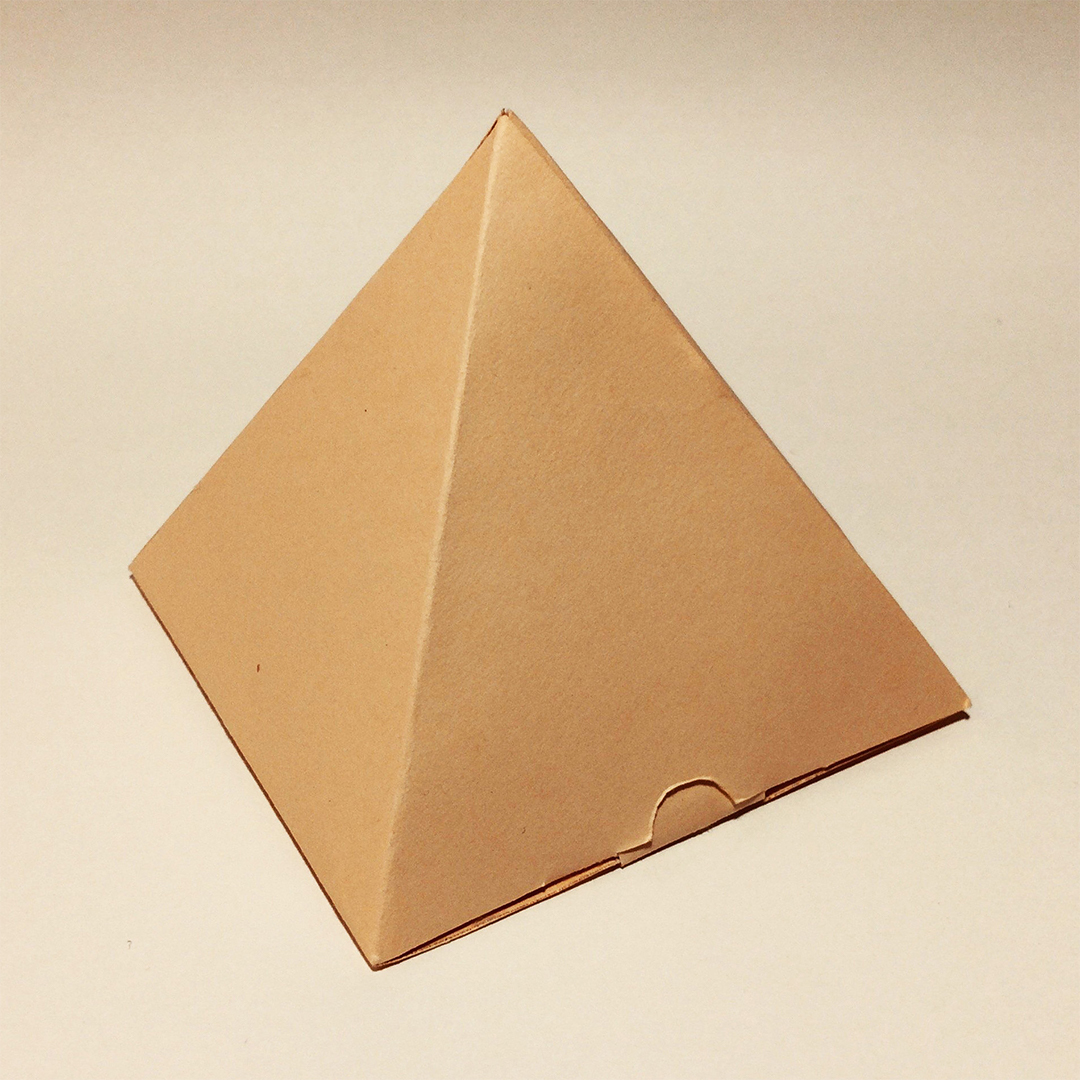
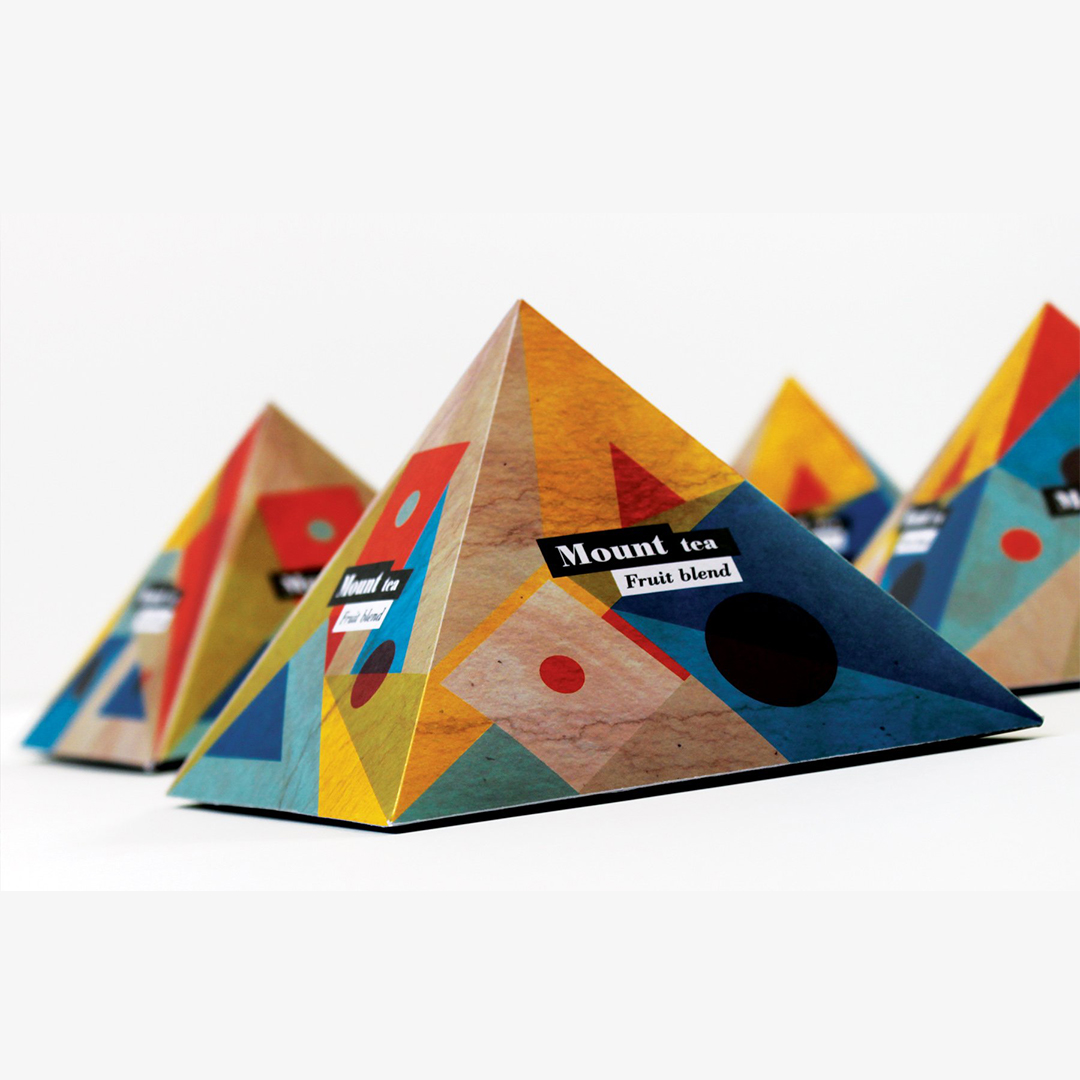
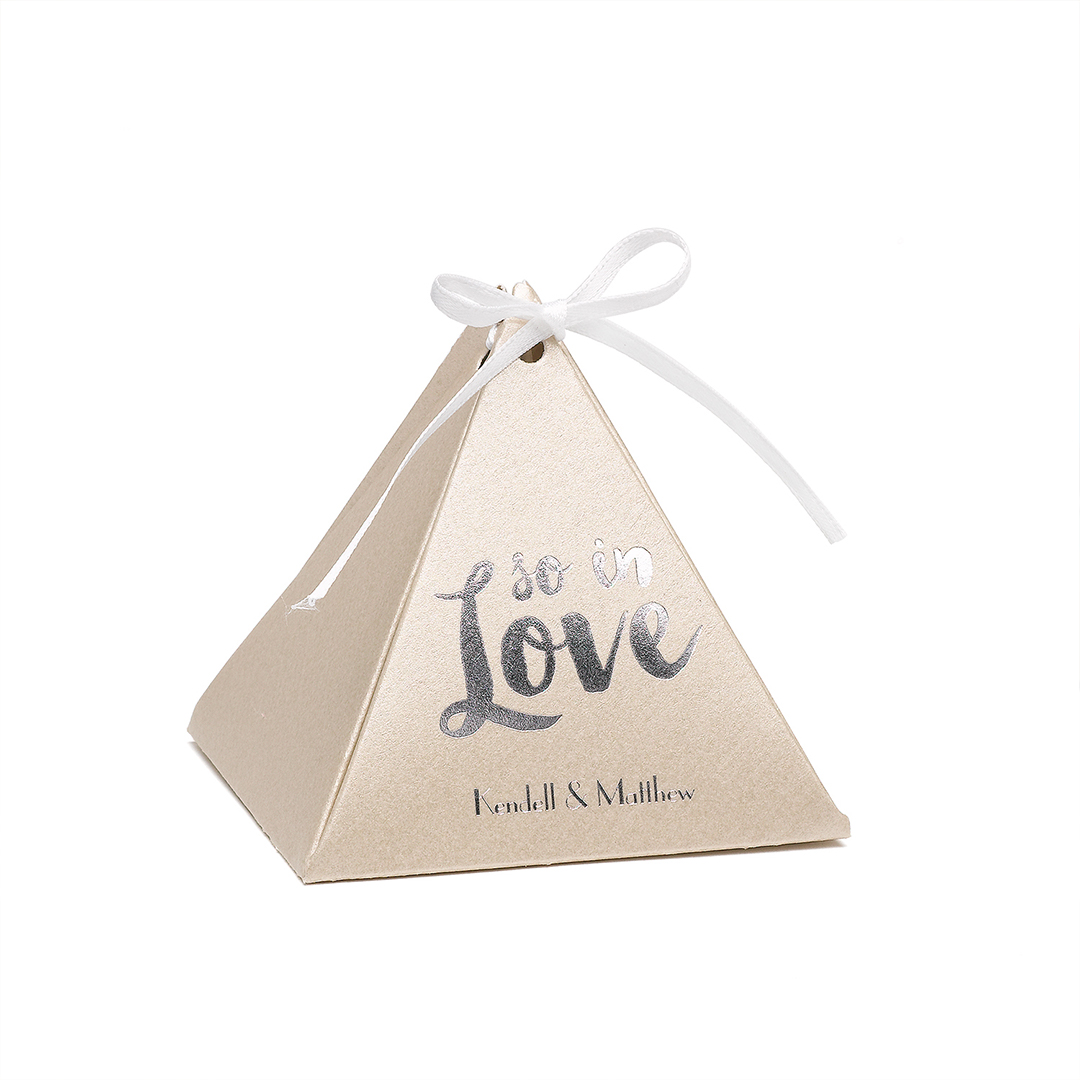
Cardboard pyramid boxes give small products a tall, angular home that immediately looks different from standard square cartons on shelves and counters. Many brands pair them with Cardboard Triangle Packaging Boxes so their geometric packaging family feels consistent from one product line to the next. This keeps displays looking organised even when shapes vary, and lets teams arrange ranges by height or footprint in a way that feels deliberate. The pointed profile catches light from several angles, which quietly pulls attention toward confectionery, mini candles, jewellery pieces, and gift items.
Because the base is compact, pyramid units suit crowded counters, small shelving bays, and temporary displays where every centimetre matters. The form works well for festive themes, wedding favours, seasonal launches, and short-run gift collections that need something a little different without changing the entire packaging system. Flat-packed blanks store neatly and can be folded in batches when needed, so stockrooms stay manageable even when several colourways or artwork versions are in use. This balance of character and practicality turns the shape into a reliable tool rather than a one-time novelty.
Display impact of angular cardboard packaging
Angular packaging changes how light and shadow behave across a display, which can help shoppers notice a new line without adding extra fixtures. Pyramid faces create small, clear zones for graphics, while the peaks act like markers that lead the eye across a shelf or along a counter. This makes it easier to guide customers through flavour ladders, scent families, or price levels using nothing more than shape and layout.
The structure also supports a tidy in-hand experience. When a customer picks up a box, the tall form feels deliberate rather than bulky, and the panels give just enough space for essential text. A cluster of pyramids can stand alone as a mini stage for chocolates, fragrance samples, or limited-edition keepsakes. Over time, familiar angular silhouettes help people recognise your brand even before they can read the logo.
Benefits of pyramid shapes in retail and gifting
- Helps new ranges stand out from standard square and rectangle packs
- Uses vertical space so small footprints still feel noticeable on shelves
- Offers four or more faces for artwork, patterns, and short product details
- Flat-packed blanks store efficiently and assemble in a few quick folds
- Pairs well with ribbons, tags, and seals for seasonal or event themes
- Works across sweets, beauty minis, jewellery, and small keepsakes
- Cardboard construction supports common recycling and waste systems
- Fits naturally into counter-top, cabinet, and window display layouts
Planning tips for your first pyramid packaging run
- List the products you want to place in pyramids and note weight and size.
- Measure base width and height so units align with shelf depth and table space.
- Decide if you prefer solid faces, small windows, or a mix of print and cut-outs.
- Map colour themes for core lines and seasonal limited editions.
- Think through how boxes will travel from packing line to store or event venue.
- Select coating types such as Gloss, Matte, or Spot UV for the outer faces.
- Prepare artwork that remains easy to read from multiple viewing angles.
- Test folded samples with real products to confirm fit, balance, and closure.
| Use case type | Typical contents | Size direction | Closure style idea | Display suggestion |
|---|---|---|---|---|
| Boutique confectionery | Truffles or chocolate pieces | Small and compact | Simple tuck with optional ribbon | Clustered groups along counters |
| Wedding or party favour | Treats or small keepsakes | Palm-sized units | Top tuck with small tag | Single box at each place setting |
| Beauty and skincare mini | Sample creams, soaps, masks | Slim and tall | Hidden lock base and neat lid | Tiered stands near mirrors |
| Jewellery and accessories | Rings, pendants, charms | Slightly shorter height | Insert plus top tuck | Mixed heights in glass cabinets |
| Seasonal promotions | Collectable tokens, tiny gifts | Mixed sizes in a family | Ribbon tie at or near the apex | Staggered rows in window displays |
| Corporate gifts | Branded snacks or keepsakes | Medium footprint | Printed seal or discreet sticker | Neat rows on reception counters |
| Subscription rewards | Monthly bonus gifts | Variable shapes within limits | Standard lock base | Arranged by month on shelves |
Creative display ideas for pyramid product lines
Once products sit in pyramid formats, your display story becomes more flexible without adding much complexity for the team. Many planners look across Cardboard Boxes by Size and Shape to decide which pyramids should sit beside square, rectangle, or triangle packs so the whole range feels coordinated. Grouping pyramids by height, colour, or pattern allows you to build simple clusters that look thoughtfully arranged even on a small counter. The shape works as a visual cue that something is special, while the base still fits standard shelving.
For celebrations and events, the same packaging style doubles as décor and take-home container. Guests might find a pyramid on their place setting, on a treat wall, or grouped around a central display, and then carry it away as part of the experience. Angled faces give designers several surfaces to share logos, dates, names, or short notes without needing extra tags for every message. As teams use pyramids more often, they often become a regular choice for limited runs, loyalty rewards, and seasonal surprises.
How layout and shape guide customer attention
Thoughtful arrangements can change how people move past a display. Pyramids set in arcs, gentle spirals, or stepped lines naturally lead the eye from one product to the next. When each height or colour signals a different flavour or scent family, customers understand the structure of the range without having to read every label. This encourages browsing and helps shoppers remember where they saw a particular item.
In quieter environments such as boutiques, pyramid groupings can soften busy shelves by adding a clear rhythm. In high-traffic spaces, the pointed forms cut through visual noise created by signage and crowded racks. Because the packaging itself does some of the guiding, you may need fewer extra props, risers, or stands. That saves setup time for staff and keeps refreshes simpler between seasons or campaigns.
Ways to stage pyramid box displays
- Build low clusters at the front of tables to catch attention quickly
- Use stepped heights to move the eye from entry point to feature products
- Group colours or patterns so each block represents a flavour or scent family
- Mix pyramids with simple flat cartons to create contrast and depth
- Place a few units at eye level in cabinets to mark premium choices
- Form loose rings or spirals on event tables for a soft, flowing layout
- Combine solid and windowed designs to show contents at key touch points
- Rotate small props around the group rather than changing the boxes often
Steps to design a pyramid display concept
- Sketch a top-down view of your counter, shelf, or window area.
- Mark where you expect the shopper’s eye to land first and last.
- Decide which product line should hold the most prominent positions.
- Assign heights and colours to each zone based on that priority.
- Test a few arrangements with real stock and adjust spacing by feel.
- Add simple signage only where it supports the flow rather than repeating packaging messages.
- Take quick photos and review them on screen to check how the layout reads at a distance.
- Record the best-performing arrangements so staff can rebuild them quickly after restocking.
| Display goal | Primary setting | Pyramids per cluster | Supporting elements | Visual effect aim |
|---|---|---|---|---|
| Highlight a new flavour or scent | Counter or till zone | Small clusters of three to five | Simple price card or small sign | Draw quick focus to a single new line |
| Segment a wider range | Mid-shelf run | Repeated rows of similar height | Flat cartons and jars behind | Make structure of the range easy to understand |
| Create a seasonal feature | Window or front table | Mixed heights in repeating colours | Minimal props like foliage or fabric | Communicate a clear seasonal story |
| Offer party or favour pick-up | Event or reception table | One per guest with extras grouped | Name cards or place markers | Smooth self-service collection |
| Support subscription or mystery sets | Shelving near sign-up point | One pyramid per month or theme | Simple calendar or timeline graphic | Show variety over time in a clear sequence |
| Frame premium items | Glass cabinets or display cases | Fewer units with more space around them | Matching trays or blocks | Signal that contents are more exclusive |
Cardboard pyramid boxes diy uses for makers and teams
Many makers and small businesses enjoy working with pyramid shapes because each face offers a tidy space for hand work while the underlying structure remains consistent. Even when blank stock comes from Cardboard boxes wholesale suppliers, individual units can still be finished with stamps, stickers, wax seals, or handwritten messages. This combination lets home crafters, studio brands, and workshop hosts present their goods in packaging that feels personal without losing the reliability of a proven dieline.
Score lines make folding intuitive once a few samples have been assembled. That means families, classroom groups, or team-building workshops can use pyramids as part of a creative activity without long explanations. Designs may start with light printed guidelines and then be completed with washi tape, string, or small charms tied near the top. The result is a distinctive look that feels coordinated across a batch, even though each piece has slightly different hand-applied touches.
Balancing handmade details with repeatable structure
A good diy-friendly pack gives room for expression while still protecting the product inside. Pyramid faces provide four or more panels where handwriting, sketches, or simple motifs can sit alongside logos and short descriptions. Makers can decide whether to keep some sides almost blank for a quiet look or fill them with patterns for a more playful style. Because the structure stays the same from unit to unit, people can experiment with decoration without worrying about changes to fit or stability.
Larger craft-focused runs can use the same shape with more formal artwork and limited hand additions. For example, a small brand might print a base colour and logo on all sides, then add ribbons only to certain editions or seasonal sets. Businesses that work across several box styles can help customers see the whole range by grouping pyramids beside their square or rectangle units in catalogues and stalls. Over time, this makes it easier for buyers to picture how different styles combine in gift sets or merch tables.
Advantages for creative teams and makers
- Clear triangular panels make artwork planning and sketching straightforward
- Works well with labels, stamps, tags, and small embellishments applied by hand
- Supports one-off batches as well as recurring runs with similar graphics
- Simple folding pattern suits workshops, school projects, and home assembly
- Shape photographs well for social media posts and product flat lays
- Cardboard surface accepts pens, markers, and stickers without special tools
- Blank or lightly printed stock gives flexibility for last-minute customisation
- Same core shape can be reused across many themes, saving design time
Steps to plan a diy-friendly pyramid project
- Decide whether you are focusing on personal gifting, small business stock, or a mix.
- Choose plain or lightly patterned blanks if you want more room for hand decoration.
- Plan which sides hold text and which are reserved mainly for patterns or art.
- Fold a handful of samples to estimate assembly time per person or per batch.
- Test a few closure ideas such as simple tucks, stickers, or ribbon ties at the top.
- Place finished samples alongside your products to check scale and balance.
- Capture trial photos in natural light to see how the boxes appear on screen.
- Adjust size, artwork density, or decoration level based on how everything looks and feels.
| Project style | Main user type | Print level on blanks | Hand work added | Typical batch size |
|---|---|---|---|---|
| Home craft gifts | Hobby makers and families | Minimal print or plain board | Stamps, doodles, hand lettering | Around 10–50 units per season |
| Small brand launch | New business owners | Logo with base colour | Labels and simple tags | Around 50–200 units per run |
| Established boutique line | Growing local brands | Full artwork sets | Occasional ribbon or wax seal | Around 200–500 units per release |
| Corporate workshop kits | Training or HR teams | Branded sides and base | Printed cards tucked inside | Around 50–300 units per event |
| Seasonal retail display | Shop merchandising teams | Full seasonal themes | Small tag or sticker additions | Around 100–600 units per season |
| Party or wedding favours | Event planners | Soft background print | Guest names added by hand | Around 50–400 units per celebration |
| Subscription bonus items | Online subscription services | Series-based designs | Occasional special sticker upgrades | Around 100–800 units per cycle |
Pyramid packaging supply and finishes for growing brands
Finishing choices give pyramid packaging the right surface and strength for everything from sweet treats to skincare minis and keepsakes. We at Shop Cardboard Boxes supply Cardboard Pyramid Boxes at wholesale prices with coating options such as Gloss, Matte, and Spot UV to support different looks and handling needs. Free design and shipping support help you move from early ideas to final print art without unwanted delays, while custom sizes and styles allow the shape to suit single premium items or small grouped sets. Fast turnaround times, high-quality material, and reliable printing options keep both small and large orders flowing in line with launch calendars.
Material selection shapes how the pack behaves in real settings. White boards provide a clean base for sharp colours and fine lines, while natural kraft boards give a warmer, grounded tone that works well with simple darker inks. Heavier boards support stacked displays and longer journeys through courier networks, whereas lighter boards suit events, sampling campaigns, or short-run promotions that stay close to home. Matching finishes across diy-inspired projects and larger commercial runs keeps the brand feeling familiar no matter who is doing the final assembly.
Choosing materials and surfaces for each pyramid range
Gloss coatings bring extra clarity and brightness to bold artwork, which suits confectionery, festive gifts, and lively cosmetic lines that need energy at first glance. Matte coatings offer a softer, low-glare surface that helps detailed text and subtle gradients stay legible under strong lighting in stores or at events. Spot UV can be used to highlight logos, icons, or pattern elements with a gentle shine while leaving most of the surface calmer, giving depth without overwhelming the design.
Board weight deserves as much thought as artwork. Heavier grades carry the load for stacked arrangements in windows or at the back of deep shelves. Lighter options make sense when boxes will be assembled on-site at markets, workshops, or seasonal stalls, where quick folding and easy transport matter more than long-term stacking. Across all these choices, the goal is steady behaviour from the box so packers, merchandisers, and customers all feel that the shape supports their part of the journey.
Material and finish options to consider
- Gloss-coated white board for bright, colourful product stories
- Matte-coated white board for calm, low-reflection surfaces
- Spot UV on selected areas to draw attention to key brand details
- Natural kraft materials for earthier, more relaxed presentations
- Heavy-duty board grades for larger pyramids and stacked displays
- Lightweight board styles for quick assembly at events and pop-ups
- Colour-managed printing so tones stay consistent across seasons
- Matching inner and outer finishes when unboxing is part of the experience
Checklist for finalising pyramid box specifications
- Confirm where your pyramids will appear, from shelves and counters to mailers.
- Choose board weight based on stacking needs and shipping distances.
- Pick a primary coating type that suits your lighting and brand style.
- Decide whether small areas of Spot UV will help key elements stand out.
- Align material choices with other packaging in your range for a unified feel.
- Review artwork proofs at full size to check line sharpness and text legibility.
- Approve colour samples under the lighting conditions where boxes will be seen.
- Lock in production timelines so deliveries match your planned launch or restock dates.
| Material or finish type | Visual impression | Best usage situation | Handling benefit | Extra planning note |
|---|---|---|---|---|
| Gloss-coated white board | Bright, clear surface | Sweets, gifts, lively cosmetic sets | Wipes down more easily | Helps strong colours stay vivid on edges and faces |
| Matte-coated white board | Soft, low-glare look | Beauty, skincare, calm product lines | Text easier to read in bright light | Suits packs with more detailed information |
| Spot UV on selected areas | Focused highlights | Logos, line art, pattern accents | Guides the eye to brand marks | Works well over either gloss or matte bases |
| Natural kraft material | Warm, paper-led tone | Eco-influenced or rustic themes | Comfortable in the hand | Pairs well with simple darker inks and minimal art |
| Heavy-duty board grades | Firm, stable structure | Stacked displays and longer shipping routes | Holds shape during handling and transit | A good fit for larger pyramid sizes |
| Lightweight board styles | Easy to fold and carry | Events, samplers, and short campaigns | Speeds up on-site assembly | Useful when storage and transport space are limited |
| Colour-managed printing | Consistent brand tones | Multi-season product families | Keeps artwork aligned across runs | Especially helpful when ranges repeat over several years |