





Description
Cardboard boxes with holes for daily logistics
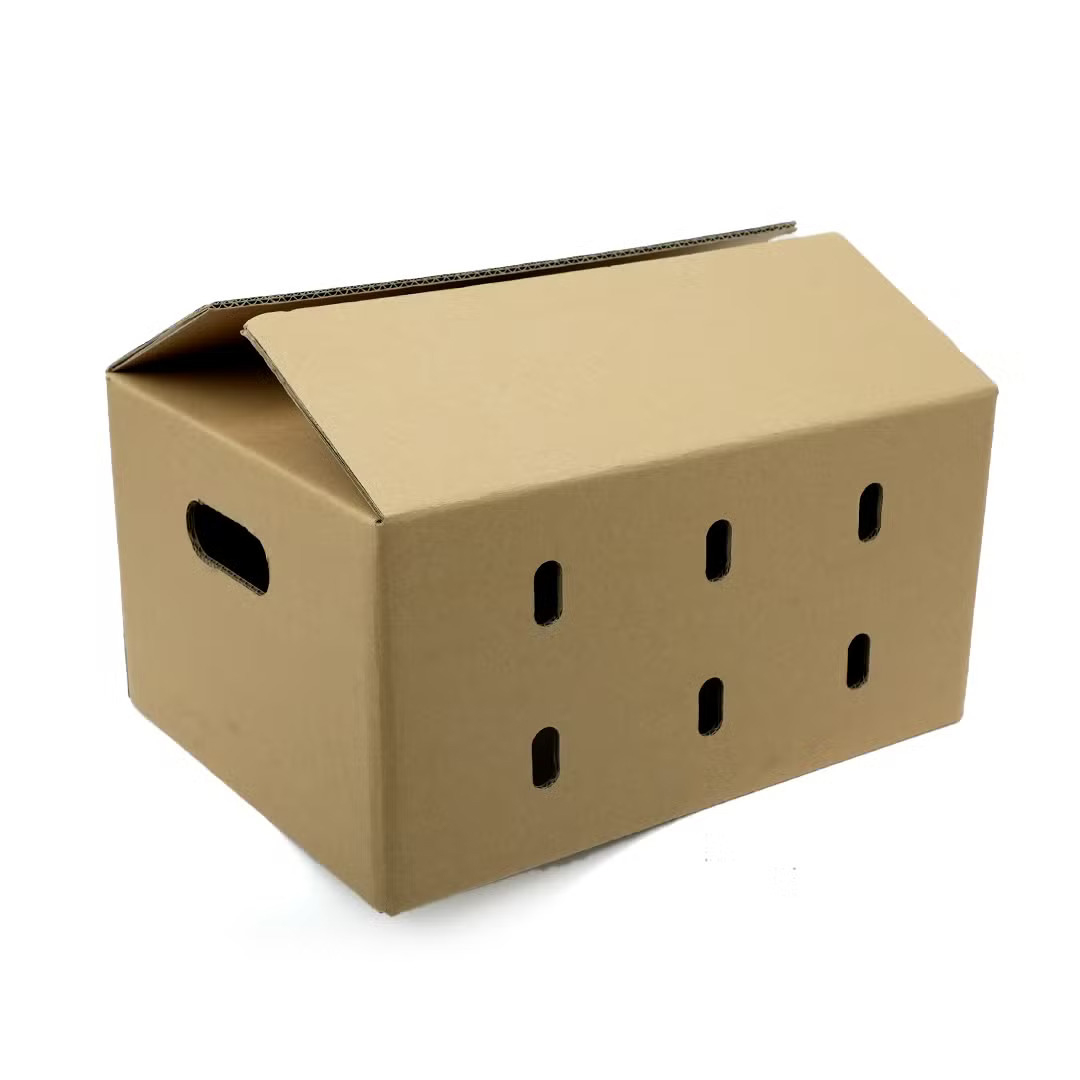
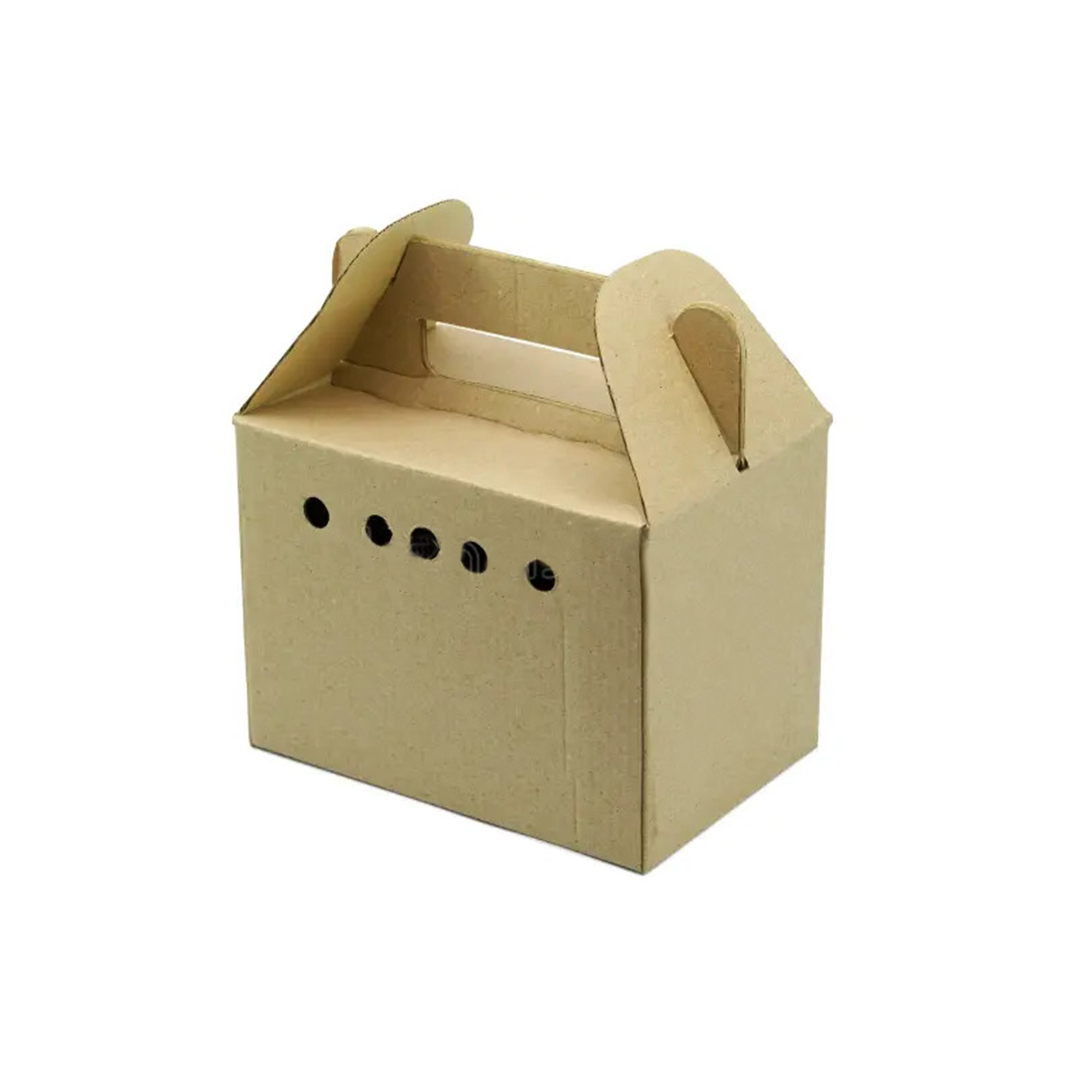
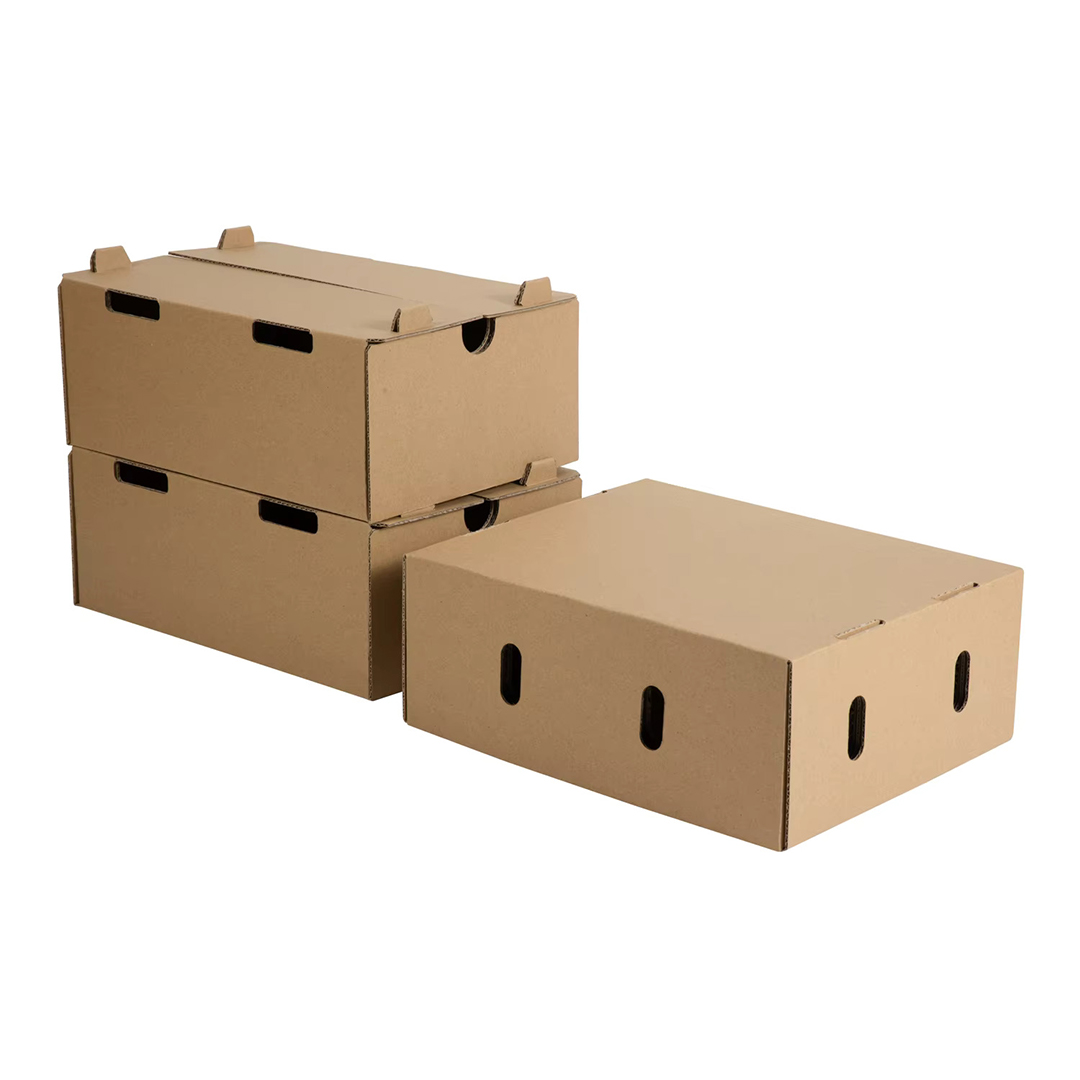
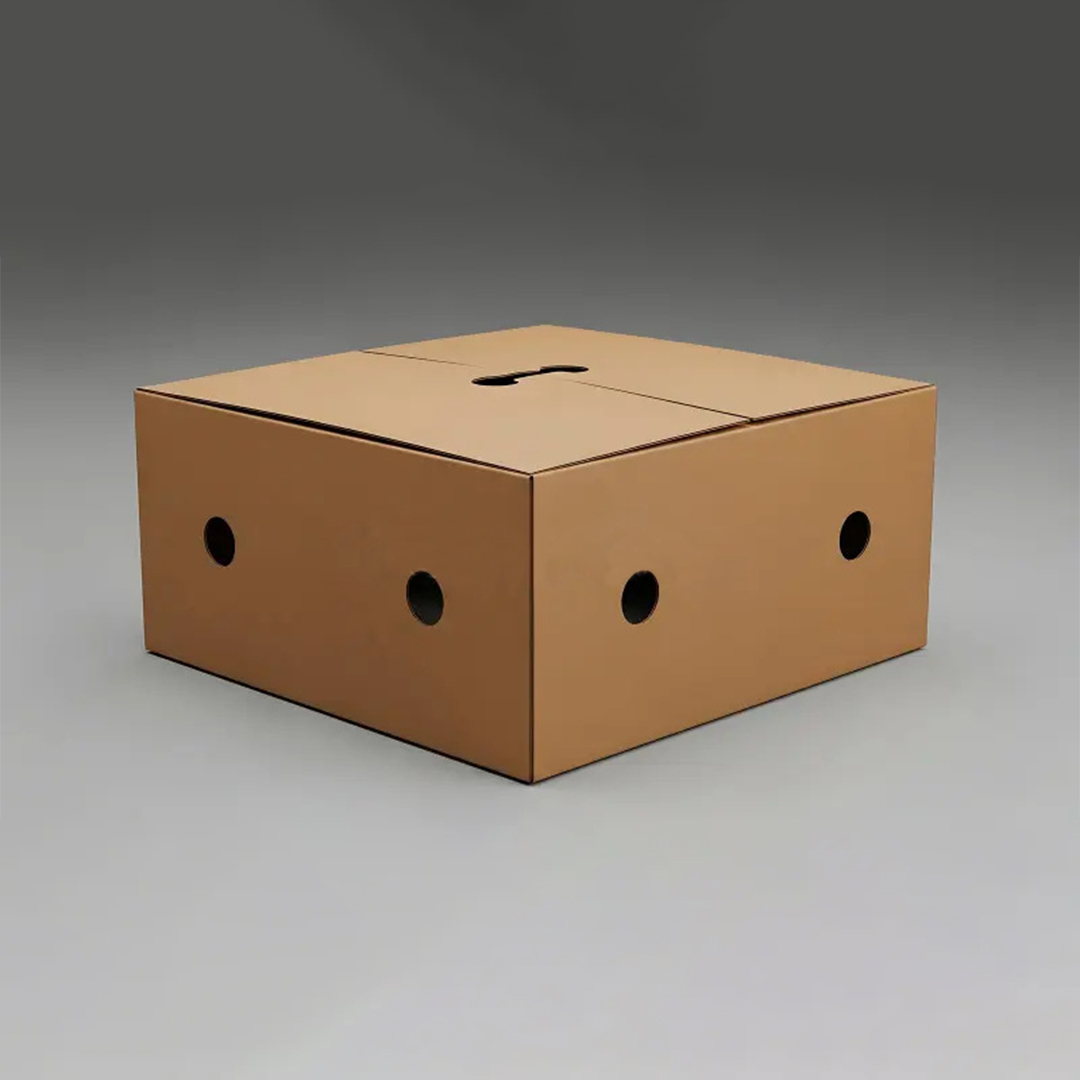
Cardboard boxes with holes help brands move, store, and present products in a way that feels simple for staff and clear for customers. Many operations rely on Shop Cardboard Boxes when they need ventilated or handle-cut designs that still behave like standard corrugated units in racking and on pallets. The same box can serve as a storage container, transport carrier, and display unit because the holes work as grip points, air vents, or visibility windows depending on the layout. This gives one structure several roles across farms, warehouses, retail spaces, and delivery routes.
Die-cut openings can be placed on sides, fronts, lids, or in full patterns to support airflow or lifting needs. Handle holes lighten the strain of moving heavier goods, while ventilation designs help heat and moisture escape from packed fruits, vegetables, and bakery products. For electronics, toys, and boxed hardware, smaller cutouts can show part of the product or label area without opening the carton. Together, these options let teams handle stock faster while still protecting the contents and keeping the packaging simple to understand.
Ventilation and visibility for sensitive products
Fresh produce, baked goods, and chilled items respond better when packaging helps them breathe instead of trapping warm, damp air. Cardboard boxes with holes allow air to circulate around the product, which supports more stable temperatures during storage and transit. This is especially important for farms, markets, and food distribution centres where crates may sit stacked, and airflow is essential to maintaining quality. The same openings make quick visual checks easier so staff can see what is inside without cutting tape or lifting lids.
In retail environments, display cutouts can show colour, texture, and branding on the products themselves while the box continues to support stacking and protection. Customers get a clear view of what they are buying, and staff can restock shelves quickly using the same outer cartons. The combination of ventilation and visibility reduces waste, shortens inspection times, and keeps the supply chain moving smoothly. Instead of relying on separate trays and containers, one correctly designed box with holes can serve multiple steps in the journey.
Benefits of ventilated storage packaging
- Supports fresh goods that need airflow during transport and storage
- Helps reduce moisture build-up around fruits, vegetables, and bakery trays
- Allows quick visual checks without opening every carton in a stack
- Keeps products more stable when temperatures change on the route
- Works with standard pallet patterns and racking systems in warehouses
- Can double as a simple retail display when positioned correctly
- Helps protect delicate packed goods from being fully enclosed in heat
- Reduces the need for extra repacking into open trays at destination
Handling improvements in everyday operations
- Side grip holes give staff a safer way to lift heavy or bulky loads
- Cutouts guide hand placement and reduce awkward grips on cartons
- Boxes with handles help limit accidental drops and strain injuries
- Vent openings reduce pressure on seams when temperature shifts occur
- Product windows let workers confirm contents without cutting tape
- Reusable designs can move between storage, transport, and display zones
- Clear hole positions help standardise how boxes are stacked on pallets
- Custom layouts let each brand support its particular handling routines
| Feature | Detail | Material options | Finishing choices | Add-ons and features | Usage and application |
|---|---|---|---|---|---|
| Hole placement | Handles, vents, or product windows | Kraft, corrugated, white board | Matte, gloss, spot UV | Custom die-cut layouts | Produce, toys, retail goods |
| Board strength | Standard to heavy-duty grades | Single, double, or reinforced flutes | Anti-scratch or moisture layers | Extra grip reinforcement | Warehouses and transport |
| Edge quality | Smooth cut and folded edges | Recycled or virgin stock | Natural or coated surfaces | Safety-focused shaping | Manual handling areas |
| Capacity range | From light packs to heavy loads | Mixed corrugated builds | Plain or printed faces | Barcodes, logos, symbols | Stores, farms, and logistics hubs |
Heavy duty boxes with holes for tough loads
Some sectors need boxes that tolerate weight, impact, and repeated stacking while still offering safe handholds and airflow. Heavy duty cardboard boxes with holes are built from thicker corrugated layers that stand up to warehouse traffic, long-distance shipping, and busy loading docks. Many brands pair these heavier units with more visually focused packaging like Hexagon Cardboard Boxes when they want a mix of transport strength and on-shelf presentation across the same product line. This way, the handling box supports logistics while the shaped box handles gifting or retail display.
Thicker boards and reinforced flutes help these heavy duty boxes resist crushing from vertical loads and vibration in transit. Handle holes are shaped and positioned so that workers can grip securely even when the carton is full of dense goods like root vegetables, drinks, or equipment. Ventilation patterns can be scaled up on large farm crates where heat must escape quickly, or scaled down on industrial packaging where airflow is helpful but protection remains the main goal. This flexibility means one structural family can serve many different heavy load scenarios.
Performance under stacking and transport stress
Palletised loads, bulk shipments, and high racks put steady pressure on cardboard packaging. Heavy duty boxes with holes are designed to keep that pressure under control while still allowing safe handling. Properly engineered vent or handle zones maintain board strength by using shaped cutouts and reinforced areas rather than random gaps. This preserves stacking capacity so the bottom cartons continue to support the weight above, even when loads are mixed or long routes are involved.
In busy hubs, cartons are moved by hand, pallet jack, and forklift, sometimes several times in the same day. Grip holes allow staff to reposition boxes quickly without relying only on mechanical equipment, which is useful in narrow aisles or small vehicles. When handle areas are matched to box size and typical load weight, they can reduce fatigue and help prevent slips. Over time, consistent performance in these harsh conditions supports safer workflows and fewer damaged products.
Reasons heavy duty styles are selected
- Handle demanding loads where standard cartons may deform
- Tolerate repeated stacking in warehouses and cold rooms
- Support transport of dense produce, liquids, and hardware items
- Provide safe manual grip points on larger, heavier boxes
- Accept reinforced vent patterns that still keep structure strong
- Help separate product batches by printed branding on tough board
- Work alongside lighter boxes in tiered packaging systems
- Fit into existing pallet and rack footprints despite added strength
Planning tips for demanding load projects
- Start by mapping the heaviest product weights and stacking heights
- Select flute combinations that match expected pallet and rack pressures
- Decide where handle and vent holes genuinely support the workflow
- Match hole sizes to gloved or bare-hand use in real environments
- Confirm that reinforced zones line up with contact points on pallets
- Test sample boxes through full handling cycles before large orders
- Review printing options that stay legible despite rough contact
- Record performance feedback from warehouse teams and drivers
| Focus area | Detail | Material options | Finishing choices | Add-ons and features | Usage and application |
|---|---|---|---|---|---|
| Load capacity | Built for higher weight ranges | Double or triple-wall board | Protective coatings | Reinforced corners | Heavy produce and equipment |
| Handle design | Larger, shaped grip zones | High-burst corrugated stock | Smooth sealed edges | Extra ply around cutouts | Farms, factories, depots |
| Vent patterns | Tuned to product needs | Kraft and moisture-aware boards | Water-resistant finishes | Patterned hole arrays | Chilled goods and fresh stock |
| Durability | Withstands long routes | Impact-resistant flutes | Tough outer liner papers | Printed handling symbols | Export loads and long storage |
Hole styles sizes and layout variations
Boxes with holes can be planned in many sizes and layouts so that each product type gets the right balance of strength, airflow, and visibility. Many buyers use Cardboard Boxes by Size and Shape as a guide when they want handle-cut transport boxes, ventilated farm crates, and display-ready cartons to line up in neat grids on shelves and pallets. Once the basic footprint is chosen, hole shapes and positions can be tuned to match how people will lift, store, and present the packed goods. This keeps systems organised even when product lines are broad.
Side handle cutouts support manual lifting, while top holes can help with overhead movement or hooks in some environments. Front windows show product colour or labels in retail aisles, while multi-hole ventilation layouts serve fruit, vegetables, and bakery goods that benefit from airflow. Height, width, and depth can all be adjusted so that everything from narrow tool boxes to wide produce trays share a consistent pattern. By planning hole styles at the same time as overall dimensions, brands can reduce trial and error and get reliable results across each batch.
Matching hole patterns to product behaviour
Different products behave in different ways inside packaging. Soft berries, crusty bread, leafy greens, electronics, and toys all respond uniquely to temperature changes, movement, and stacking. Hole layouts can reflect these differences by changing size, quantity, and distribution across panels. Smaller openings might be placed higher on the box to protect loose items, while larger vents might be spread across the sides of produce crates to let air move freely around packed layers.
For retail and eCommerce items, windows can highlight key parts of the product or the printed branding on inner packs, reducing the need to open boxes for display. Handle holes can align with label zones so staff know where to grip without covering important information. Narrow boxes may only need small thumb holes, while larger storage units might use full hand openings with rounded edges. The goal is to keep both the product and the people handling it in mind at every stage of the design.
Design choices for hole-based layouts
- Select side handles for regular manual lifting along aisles and racks
- Use top holes where overhead handling or hooks are part of the process
- Add front windows to show product, branding, or key labels in store
- Spread small vents around fresh goods that need wider airflow paths
- Adjust hole shapes so they match glove use in cooler or warehouse areas
- Keep critical structural zones free of large openings to preserve strength
- Combine several small holes rather than one large gap when needed
- Align cutouts with inner packaging so nothing important is hidden
Steps to align hole design with product needs
- Note how each product category is lifted, stacked, and displayed
- Mark typical hand positions and viewing angles along the box surfaces
- Decide which panels can safely carry vents or windows without weakening
- Match hole size to product scale and potential contact points inside
- Plan sample layouts and review them with handling teams on site
- Check that ventilation patterns support cooling and storage conditions
- Confirm that labels remain visible when boxes are stacked in common ways
- Finalise dielines only after testing prototypes in real workflows
| Design focus | Detail | Material options | Finishing choices | Add-ons and features | Usage and application |
|---|---|---|---|---|---|
| Handle layout | Side or top grip positions | Kraft, corrugated blends | Matte or light gloss | Rounded, smoothed edges | Manual handling and lifting |
| Vent coverage | Partial or full-panel openings | Produce-grade cardboards | Moisture-aware finishes | Patterned small hole arrays | Farms and fresh food hubs |
| Display windows | Product visibility areas | White card, SBS board | Clear film or open cut | Shaped viewing panels | Retail, toys, and gift packs |
| Mixed layouts | Combined vents and handles | Recycled or mixed stock | Natural or printed looks | Barcodes, SKUs, branding | Warehousing and retail routes |