






Description
Cardboard industrial parts packaging wholesale safety and organisation
Cardboard industrial parts packaging wholesale solutions help factories, workshops, and distributors keep small and large components in a stable layout from packing bench to final assembly line. Teams that already depend on display-focused outer formats such as Cardboard Display Window Boxes for kits and sample sets often apply the same structured thinking when they send nuts, bolts, brackets, housings, and fittings through long supply chains. Corrugated cardboard industrial parts packaging holds trays, dividers, and inserts in sync with the outer shell, so metal edges stay separated, labels remain readable, and part counts stay accurate even when pallets are stacked, moved, and stored again and again.
This approach supports both high-volume bulk programmes and low-volume specialist orders where the same style of component moves through different routes. Cardboard industrial parts packaging for sale provides predictable footprints for shelving, racking, and automated handling systems, while inserts and inner layouts keep items from scraping or colliding during travel. When parts arrive at plants, maintenance stores, or field depots, staff can open each box to a clear, ordered layout instead of loose, mixed pieces, which speeds inspection, picking, and documentation.
How industrial parts packaging supports daily operations
Well-planned Cardboard Industrial Parts Packaging reduces wasted time at every stage where people handle components. When parts sit in defined pockets or channels, operators can grab what they need without rummaging through loose piles, which lowers the chance of selecting the wrong item or damaging a delicate edge. The same layout used across multiple sites means staff can move between locations and still understand where each item should sit in the pack.
Corrugated cardboard industrial parts packaging also lines up with labelling, barcoding, and inspection workflows. Clear panels on the outside carry part codes, batch numbers, and routing notes, while the inside layout supports quick counting for audits and returns. Because the material is easy to print, brands can add handling icons, torque or fit notes, and simple diagrams that help technicians choose and use the correct part without searching extra documents during busy shifts.
Key strengths for industrial users
- Helps separate sharp, coated, or machined surfaces so they do not scrape against each other
- Supports clear counting and checking of parts at receiving docks and assembly points
- Works with corrugated cardboard industrial parts packaging in single or double wall grades
- Allows stable stacking on pallets and in racks without crushing smaller components
- Adapts to trays, cells, and channels for mixed shapes in the same outer carton
- Reduces noise and movement during transport, which supports long distance routes
- Aligns with printed handling guidance for safety and quality teams
Planning steps for a new industrial parts box
- List key parts or assemblies that will share the same outer size.
- Measure the largest and heaviest items so you can set a realistic internal layout.
- Decide which parts must never touch and which can share a group compartment.
- Choose board grades that match weight, stacking height, and route length.
- Design inner supports such as dividers or trays that sit neatly inside the shell.
- Add clear zones for labels, barcodes, and inspection stamps on exterior panels.
- Run a small trial shipment and record feedback from operators and warehouse teams.
| Aspect | Role in industrial use | Material options | Layout choices | Typical applications |
|---|---|---|---|---|
| Outer board strength | Supports load and stacking | Single wall, double wall, heavy-duty grades | Standard or custom footprints | Bulk fasteners, fittings, stamped and machined pieces |
| Internal supports | Hold parts apart and in position | Cardboard cells, dividers, collars, trays | Straight rows, grids, or zoned compartments | Kits, repair packs, service modules |
| Surface print zones | Carry codes, instructions, and branding | One colour or multi colour printing | Side, top, and end-panel layouts | Part IDs, batch codes, safety and route markings |
| Opening and closure style | Controls how packs open on line or in stores | Tuck ends, flaps, or crash-lock bases | Top-load or front-load access | Assembly benches, kitting areas, service counters |
| Impact and vibration | Manages bumps during travel and handling | Cushioning pads, double walls, corner folds | Tight or loose internal clearance | Regional, national, and export shipments |
| Recycling and disposal | Fits standard waste and recycling flows | Higher recycled content board choices | Simple, ink-aware designs | Sites with strong environmental and reporting targets |
| Repeat use potential | Supports limited reuse for storage or returns | Durable folds and reinforced corners | Stackable and label-friendly formats | Back-of-house part rooms and maintenance stores |
Corrugated cardboard industrial parts packaging for heavy components
Corrugated cardboard industrial parts packaging gives production teams a measured way to handle dense, irregular, or sharp-edged components alongside lighter accessories. Many buyers match these units with outer carton footprints drawn from Cardboard Boxes by Material Strength so pallets, racking bays, and conveyor guides can follow the same base dimensions across a wide range of parts. This planning helps Cardboard industrial parts packaging suppliers support long programmes where new components appear but core footprints and stacking rules remain stable.
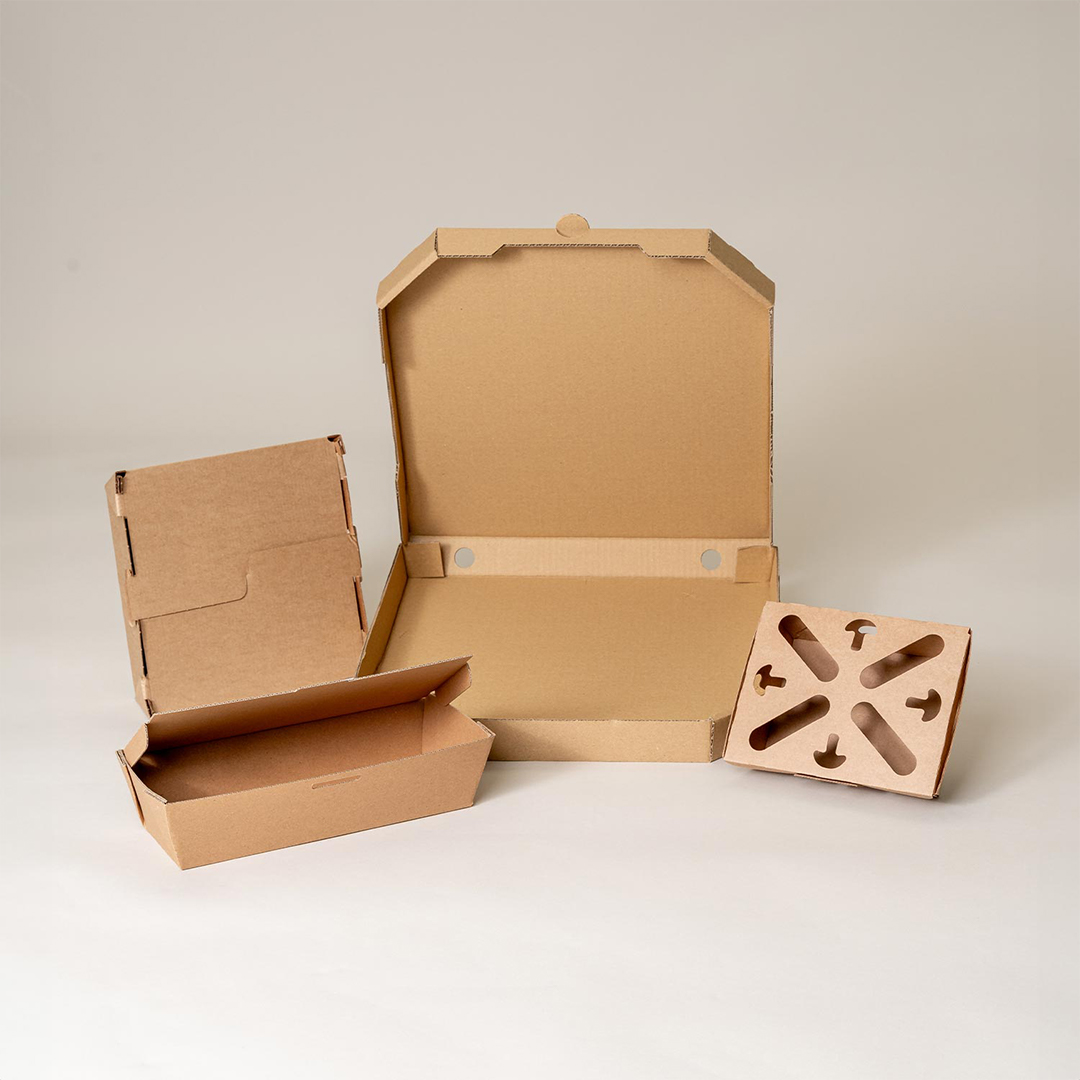
Within each carton, inner fittings create a calm layout that suits both lifting equipment and manual handling. Heavy brackets, housings, or gears can sit in deeper wells or reinforced channels, while smaller bolts, seals, and clips sit in split trays or lidded pockets. Cardboard industrial parts packaging manufacturers can cut cut-outs, finger access points, and cable routes so technicians on the line can grab what they need quickly without cutting or tearing the pack in rough ways that send debris into work areas.
How corrugated structures manage weight and shape
Corrugated board combines flat liners and fluted cores, spreading impact through the structure instead of letting forces hit parts directly. For industrial components, this means a carton can take reasonable knocks while still holding its shape and maintaining separation between items. When combined with inserts and pads, Cardboard industrial parts packaging wholesale designs can support heavier assemblies without demanding fully rigid plastics or metal cages.
Shippers can choose flute profiles and wall strengths based on the heaviest likely load and stacking plan. Long, thin parts might need narrow channels that stop bending; compact, dense parts may benefit from thick pads and multi-wall corners. Because corrugated board can fold cleanly, Cardbox Packaging style designs can integrate handles, locking features, or hinged access points without losing overall strength, making the same pack useful at multiple points in the route.
Benefits of corrugated packaging for heavy or complex parts
- Spreads impact forces across a fluted core, reducing stress on single contact points
- Supports tall pallet stacks when board grade and layout are chosen carefully
- Helps prevent dents, bends, and surface marks on coated or machined components
- Works with moisture-aware finishes for routes that cross varied climates
- Allows printed handling icons and torque or orientation markers on the outside
- Supports automated taping, strapping, and stretch-wrapping systems
- Can be combined with returnable schemes where outer shells are reused several times
Points to check when choosing corrugated industrial packs
- Confirm maximum load per carton and calculate likely pallet heights.
- Review how cartons move, from forklifts and pallet trucks to conveyors and sorters.
- Decide whether heavy parts need individual pockets or grouped zones.
- Choose flute profile and board combination that matches compressive and impact needs.
- Test sample cartons in real transport and storage conditions, including humidity.
- Collect feedback from line workers on ease of opening, picking, and disposal.
- Adjust dimensions, cut-outs, or inner supports based on real-world usage data.
| Focus area | Engineering question | Design directions | Operational effect | Expected outcome |
|---|---|---|---|---|
| Load bearing capacity | How much weight each unit must hold | Heavier board, stronger flutes | Better resistance to crushing | Reliable stacking and fewer collapsed cartons |
| Part orientation | Which face or edge must be protected most | Deep pockets, edge guards, corner posts | Easier, safer placement of sensitive parts | Cleaner surfaces and lower damage rates |
| Handling method | How operators and machines will move cartons | Cut-out grips, strap lanes, flat tops | Smoother lifting, strapping, and wrapping | Reduced strain and faster handling |
| Route variability | How far and through which climates packs go | Moisture-aware liners and coatings | More stable board performance in transit | Fewer complaints due to softened or warped packs |
| Internal cleanliness | How important clean, dust-light operation is | Tight folds, minimal loose offcuts | Less debris around assembly stations | Neater workspaces and lower contamination risk |
| Labelling and coding | Where barcodes and IDs should sit | Dedicated flat zones on visible faces | Faster scanning and recording | Improved traceability and audit readiness |
| Reuse and backflow | Whether packs will return for reuse or as cores | Stronger corners and replaceable inserts | Simplified return or refurbishment handling | Lower long-term packaging costs where reuse is viable |
Cardboard industrial parts packaging suppliers and long term planning
Cardboard industrial parts packaging suppliers help engineering, procurement, and logistics teams keep many moving pieces under control through shared standards and repeatable designs. Long term relationships with dependable partners such as Custom Cardboard Boxes mean plant upgrades, new product lines, and revised stocking plans can still fit within a known set of footprints, board grades, and insert styles. Suppliers who understand industrial flows can suggest Cardboard industrial parts packaging manufacturers and formats that match planned automation, lean storage, and safety policies.
Over time, harmonised Cardboard industrial parts packaging for sale reduces the number of one-off cartons on site and cuts down on fragmented stock of inserts, dividers, and labels. When new parts appear, teams can often slot them into an existing grid, tray, or channel layout instead of starting from zero. Shared print standards keep part codes, hazard symbols, and quality marks in familiar positions so inspectors and operators can scan boxes quickly during audits and regular shifts.
Planning with suppliers for growth and change
As plants adopt new lines or re-organise assembly steps, the underlying packaging must adapt without causing chaos in warehouses or goods-in bays. Working closely with Cardboard industrial parts packaging suppliers allows companies to phase in new carton sizes, inserts, or graphics in controlled stages. Sample runs and joint testing help ensure that any change in box height, width, or opening method still fits conveyor guides, racking beams, and lift equipment.
Suppliers can also help match packaging choices to environmental roadmaps and reporting needs. Options with higher recycled content, simpler ink systems, and easy separation of any non-paper elements support recycling targets without losing strength or clarity. When data on breakage, mis-picks, or handling incidents is shared, packaging adjustments can be made in a focused way instead of relying on guesswork.
Reasons to work closely with dedicated industrial packaging partners
- Keeps carton sizes and inner layouts aligned across multiple product generations
- Supports shared artwork templates and data positions for labels and codes
- Helps forecast material use and stocking levels for ongoing programmes
- Connects you with Cardboard industrial parts packaging manufacturers for special projects
- Aligns packaging with safety, quality, and environmental guidelines over time
- Eases training for new staff by reducing variety in box shapes and markings
- Facilitates controlled changes as automation and plant layouts evolve
Long range planning actions for packaging teams
- Map major product families and assign preferred carton footprints to each group.
- Review current damage, mis-pick, and delay data with your packaging partner.
- Identify quick wins in board grade, layout, or printing that solve recurring issues.
- Agree core standards for labelling, icons, and information placement across ranges.
- Plan phased changes so new packs enter the system without blocking existing flows.
- Build review checkpoints to discuss performance and new requirements each year.
- Document final formats so all sites in the network can order and use them consistently.
| Planning theme | Question for teams and suppliers | Possible approaches | Effect on day to day work | Long term result |
|---|---|---|---|---|
| Standardisation | How many footprints and insert types are needed | Core set of carton and insert families | Simpler stocking and ordering | Less complexity, fewer stockouts and mismatches |
| Performance monitoring | How packaging problems are tracked and reviewed | Shared dashboards or periodic reviews | Faster response to issues | Continuous improvement based on real data |
| Safety and quality | How boxes support safe and accurate work | Clear icons, sturdy grips, readable labels | More confident handling and auditing | Lower incident rates and better compliance |
| Environmental alignment | How materials match sustainability goals | Recycled content targets and simple coatings | Clear messaging to stakeholders | Packaging that fits formal environmental commitments |
| Automation readiness | How packs behave on automated equipment | Flat bases, stable sides, consistent heights | Smoother machine operation | Higher throughput with fewer stoppages |
| Training and documents | How staff learn to use and dispose of packs | Visual guides and shared standards | Shorter learning curves | Reliable handling across different sites and shifts |
| Future upgrades | How new lines and plants will be supported | Modular approach to sizes and inserts | Easier introduction of new products | Packaging that grows with the business over time |